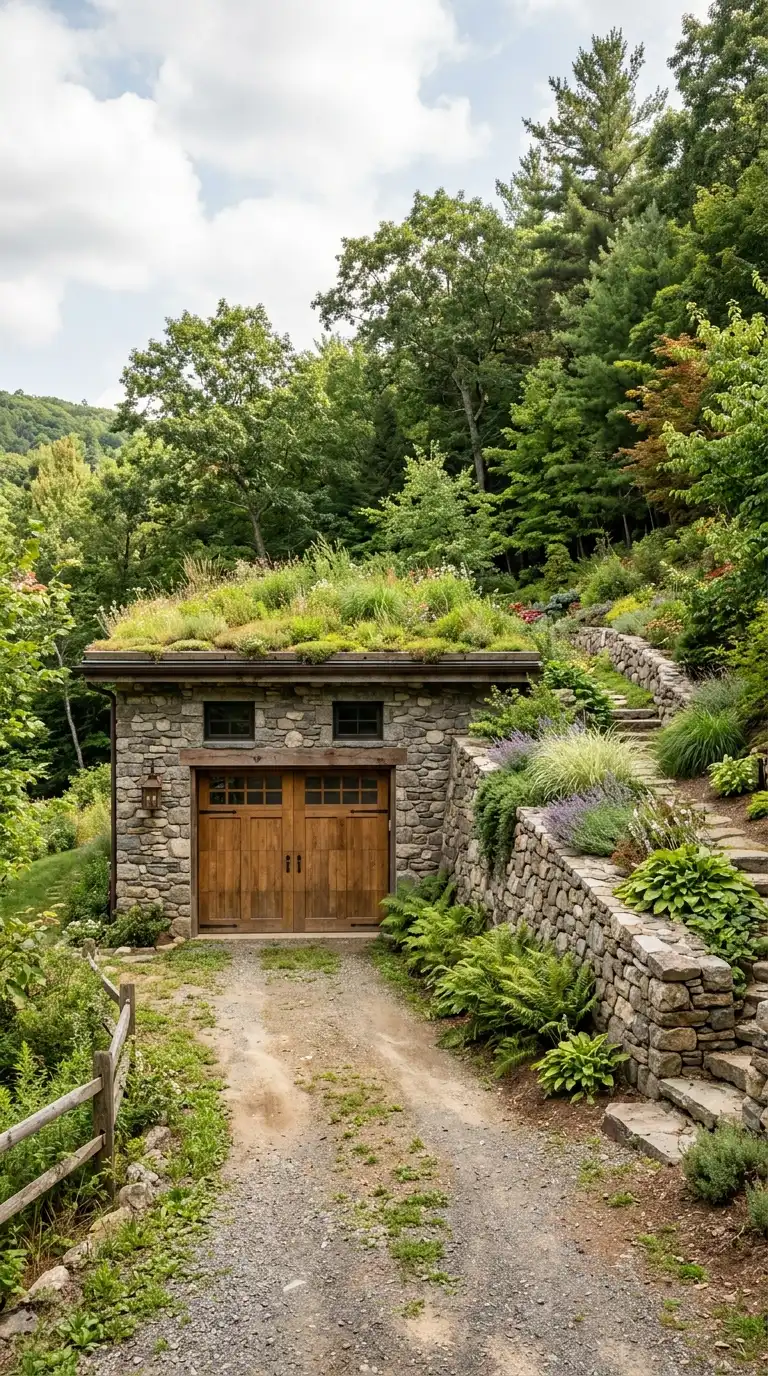
12 Container Garage Exterior Ideas
The garage often presents a challenge for curb appeal. It is typically large, flat, and utilitarian. While in-ground landscaping is a permanent solution, containers offer something uniquely valuable: flexibility. You can move them, change them with the seasons, and experiment with colors and textures without digging a single hole. Containers are also ideal for garages with narrow side yards, concrete driveways, or areas where soil is poor. From matching urns that frame the door to vertical gardens on blank walls, here are twelve container garage exterior ideas that will transform your garage from an afterthought into a design asset.
1. Flank the Garage Door with Matching Urns
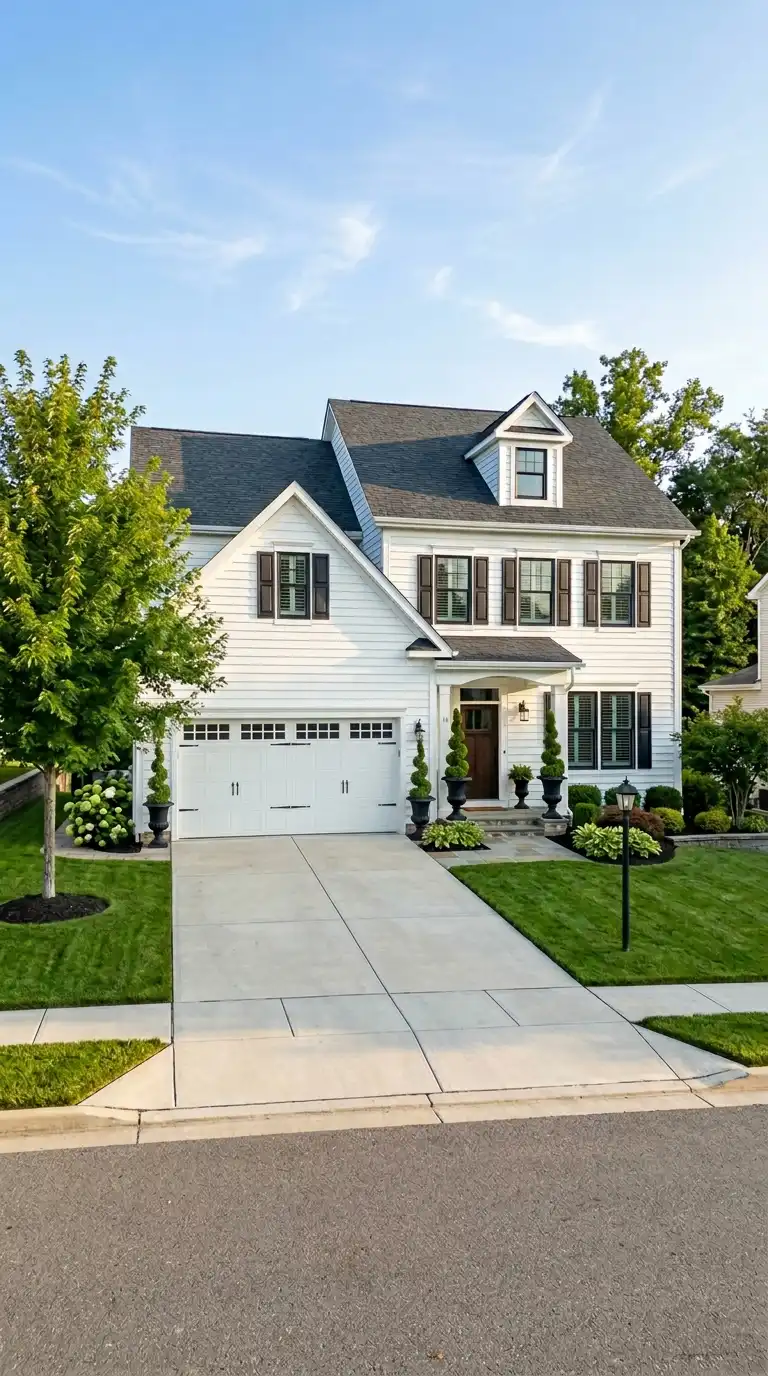
Symmetry is one of the most powerful tools in exterior design. The human eye is naturally drawn to balanced compositions. Placing two identical urns on either side of the garage door creates an immediate sense of order and intentionality. The urns should be substantial—at least 18 to 24 inches tall—so they hold their own against the scale of the garage door. Materials like fiberglass, terracotta, or cast stone work well. For a traditional look, choose classic urn shapes with rolled rims. For a modern home, select sleek cylinder planters in matte black or white.
What you put in the urns matters as much as the containers themselves. Evergreen topiaries in spiral or ball shapes provide year-round structure. For seasonal color, plant tall thriller plants like spikes or fountain grass in the center, filler plants like petunias or geraniums around them, and trailing plants like vinca or ivy that spill over the edge. In winter, fill the urns with cut birch branches, evergreens, or ornamental berries. The key is to keep the plantings tidy and proportional. Overgrown or leggy plants will look neglected rather than designed.
2. Use Low, Wide Planters Along the Garage Foundation
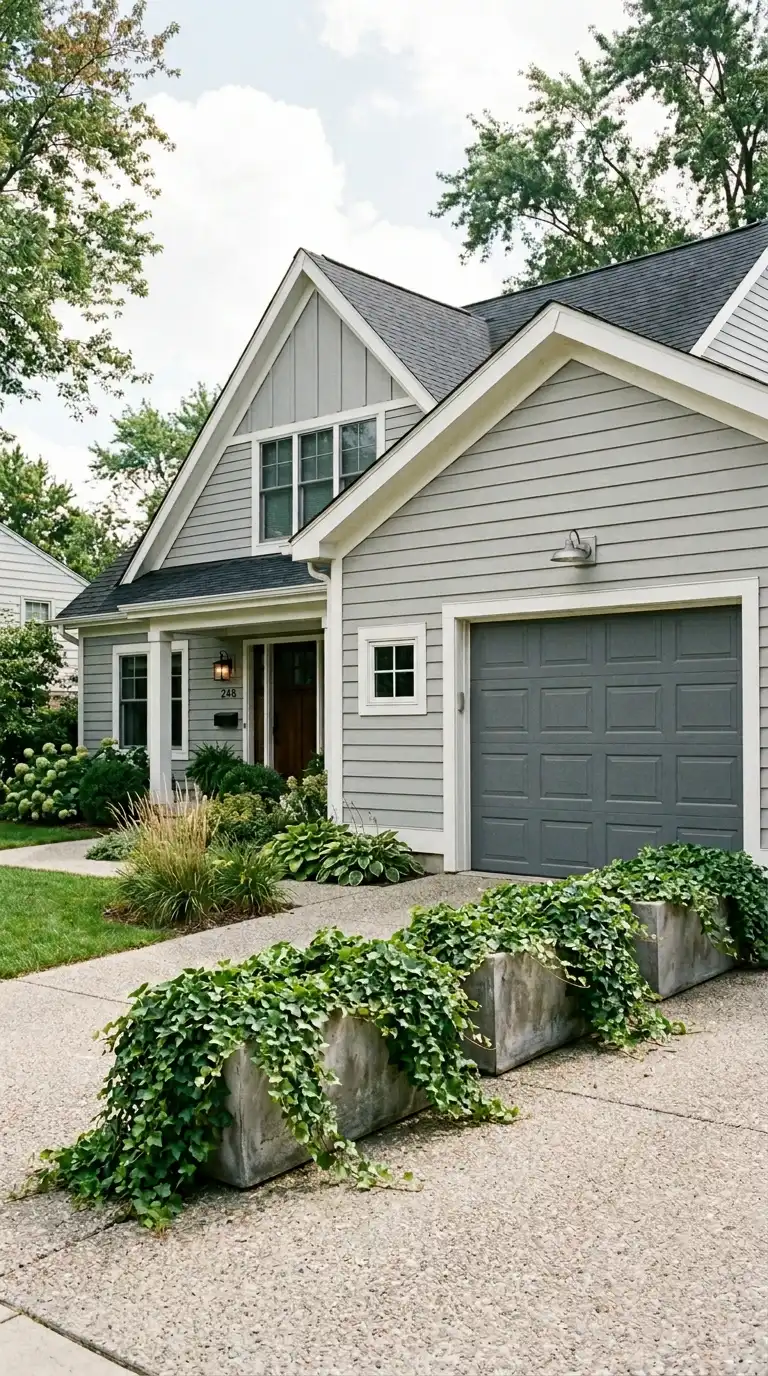
The line where the garage wall meets the driveway or foundation is often an awkward, bare strip. Low, wide planters placed along this edge soften the transition and add a layer of visual interest. Choose rectangular or trough-style planters that are at least 36 inches long and no more than 12 inches tall. The low profile ensures they do not block the view of the garage door or any windows. Materials like concrete, fiberstone, or cedar work well.
The planting strategy for low planters is all about spill and flow. Use trailing plants that cascade over the front edge to hide the planter rim. Creeping jenny, sweet potato vine, lobelia, and trailing verbena are excellent choices. Behind the trailers, add compact mounders like dwarf boxwood, heuchera, or ornamental kale for texture. Avoid tall plants that will look out of scale. A row of three or four matching planters along the foundation creates a ribbon of color that anchors the garage to the ground. This is particularly effective on garages with long, blank wall space beside the door.
3. Place Tall Cylinder Planters at Garage Corners
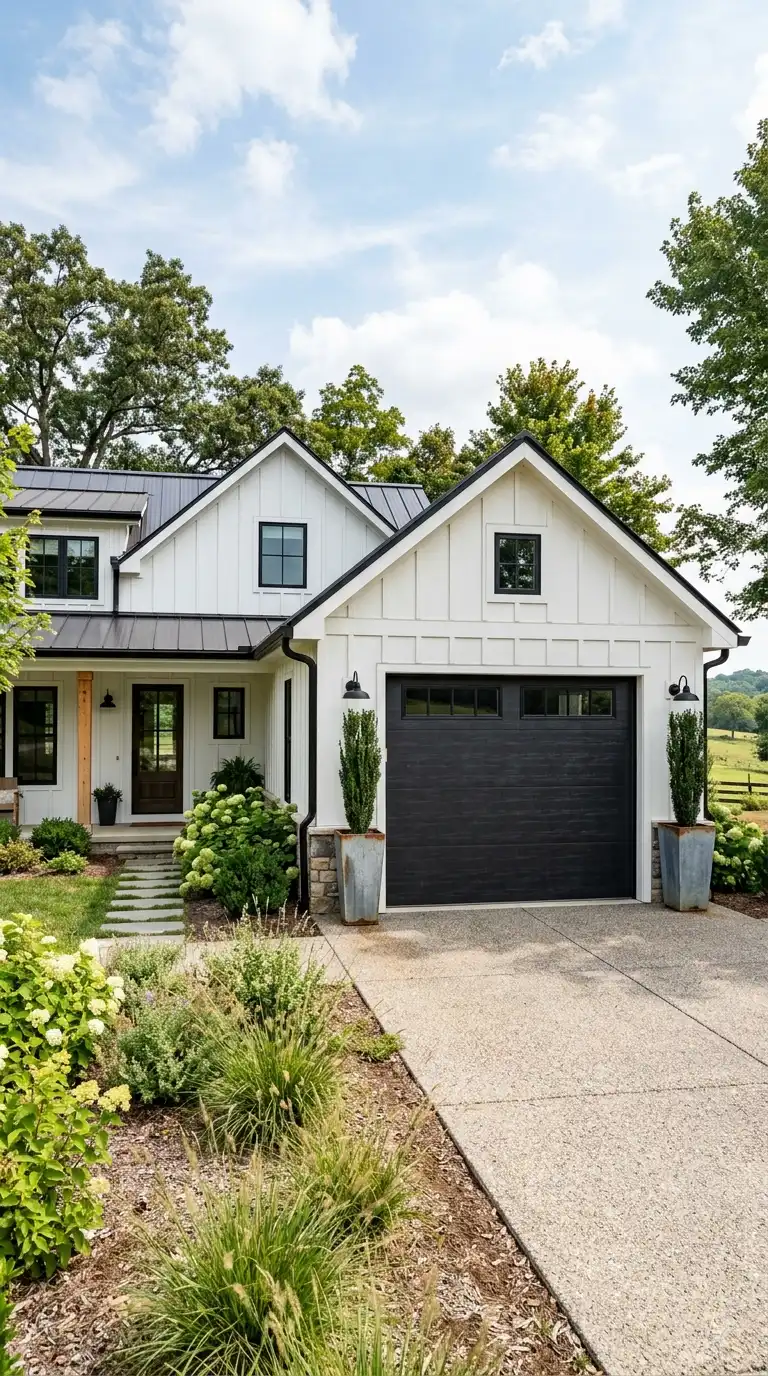
Garage corners are often dead zones. A tall planter placed at each front corner of the garage defines the building’s footprint and draws the eye upward. These planters should be narrow and tall—at least 24 inches high but no wider than 16 inches—so they fit neatly against the wall without protruding into the driveway. Materials like galvanized metal, dark fiberglass, or powder-coated aluminum suit modern and farmhouse styles.
For planting, think vertical. Use a single dramatic plant like a small ornamental tree, a tall grass, or a columnar shrub. Japanese maple, Sky Pencil holly, or ‘Karl Foerster’ feather reed grass work beautifully. The plant should remain relatively narrow so it does not block the corner visually. Alternatively, use a tall planter as a base for a seasonal display: spring bulbs, summer annuals, and fall mums. The repetition of identical planters at both corners creates a framing effect that makes the garage feel more deliberate and architectural.
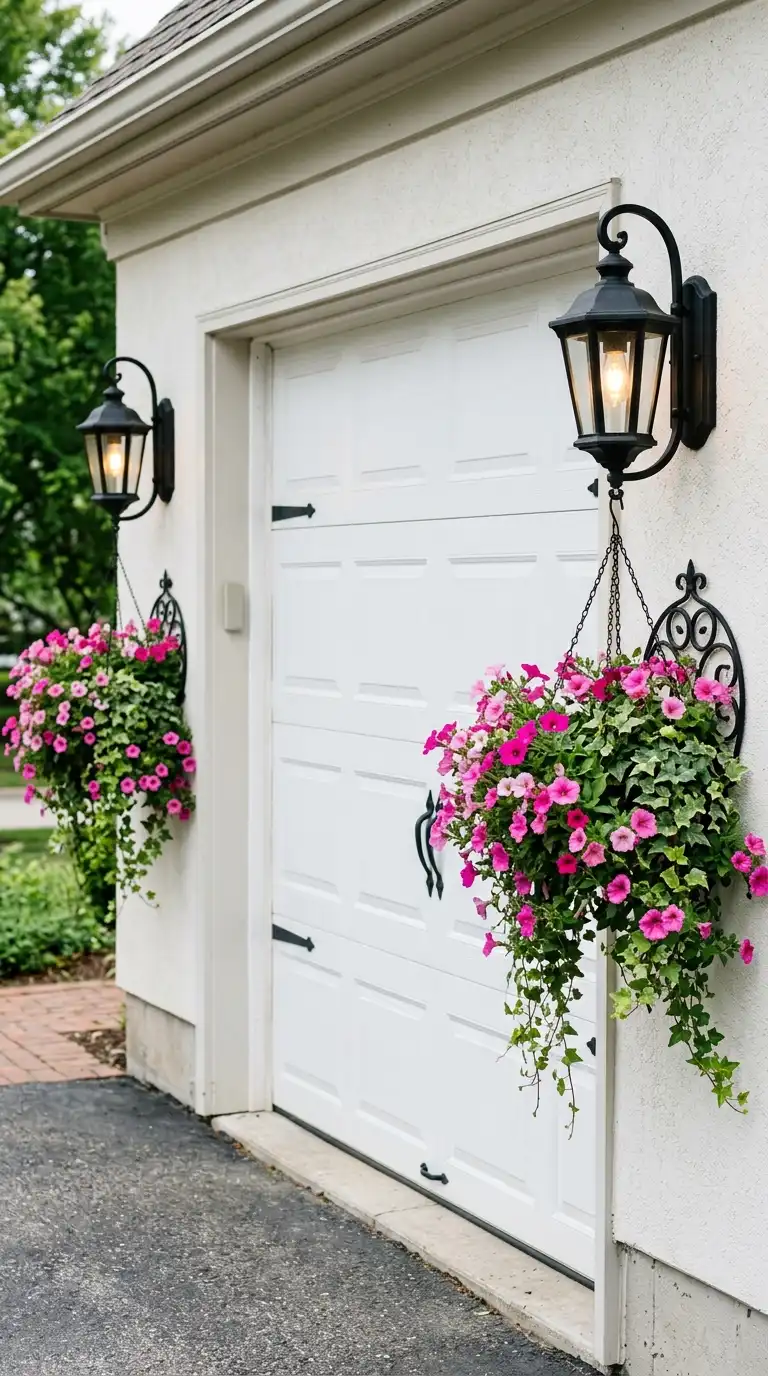
4. Hang Matching Baskets from Garage Wall Sconces or Brackets
If your garage has wall sconces or you are willing to install decorative brackets, hanging baskets add a charming, eye-level layer of greenery. Place one basket on each side of the garage door, hung from the sconce arm or from a dedicated decorative bracket. The baskets should be at a height where they do not block the sconce light or hit anyone walking below—typically 6 to 7 feet off the ground.
Choose lightweight coco-fiber or plastic baskets. Fill them with trailing plants like million bells, bacopa, or trailing rosemary that will spill down and soften the hard edges of the garage facade. For a cohesive look, match the basket color to the garage door hardware or house trim. Black metal baskets work with nearly any style. Hanging baskets are also easy to swap seasonally: bright annuals for summer, ornamental peppers for fall, and evergreen boughs with red berries for winter. The vertical interest draws the eye away from the large expanse of the garage door itself.
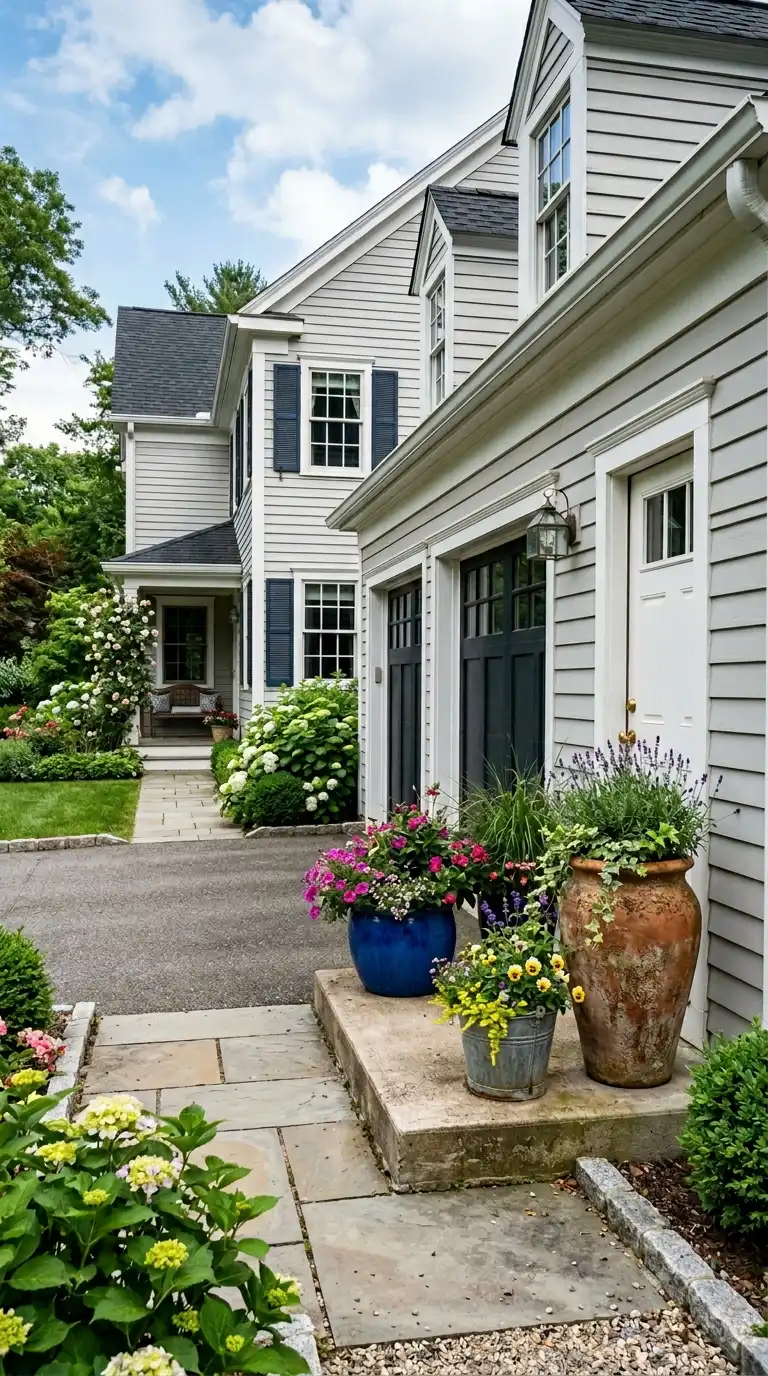
5. Create a Container Grouping on a Garage Bump-Out or Landing
Many garages have a small bump-out, landing, or stoop near a side door. This area is often underutilized. A grouping of three containers in varying heights and widths creates a mini garden vignette. Use the “thriller, filler, spiller” formula: one tall plant in the back or center (thriller), two to three medium plants around it (filler), and trailing plants over the edge (spiller).
Place the largest container on the ground, a medium one on a low stand or brick, and a smaller one on a higher surface if available. Mix container materials and colors but keep a unifying element—all terra cotta, all glazed blue, or all galvanized metal. This layered approach adds depth and makes the garage entrance feel like a deliberate garden feature rather than an afterthought. This works especially well when the side garage door is visible from the street or from the front walkway.
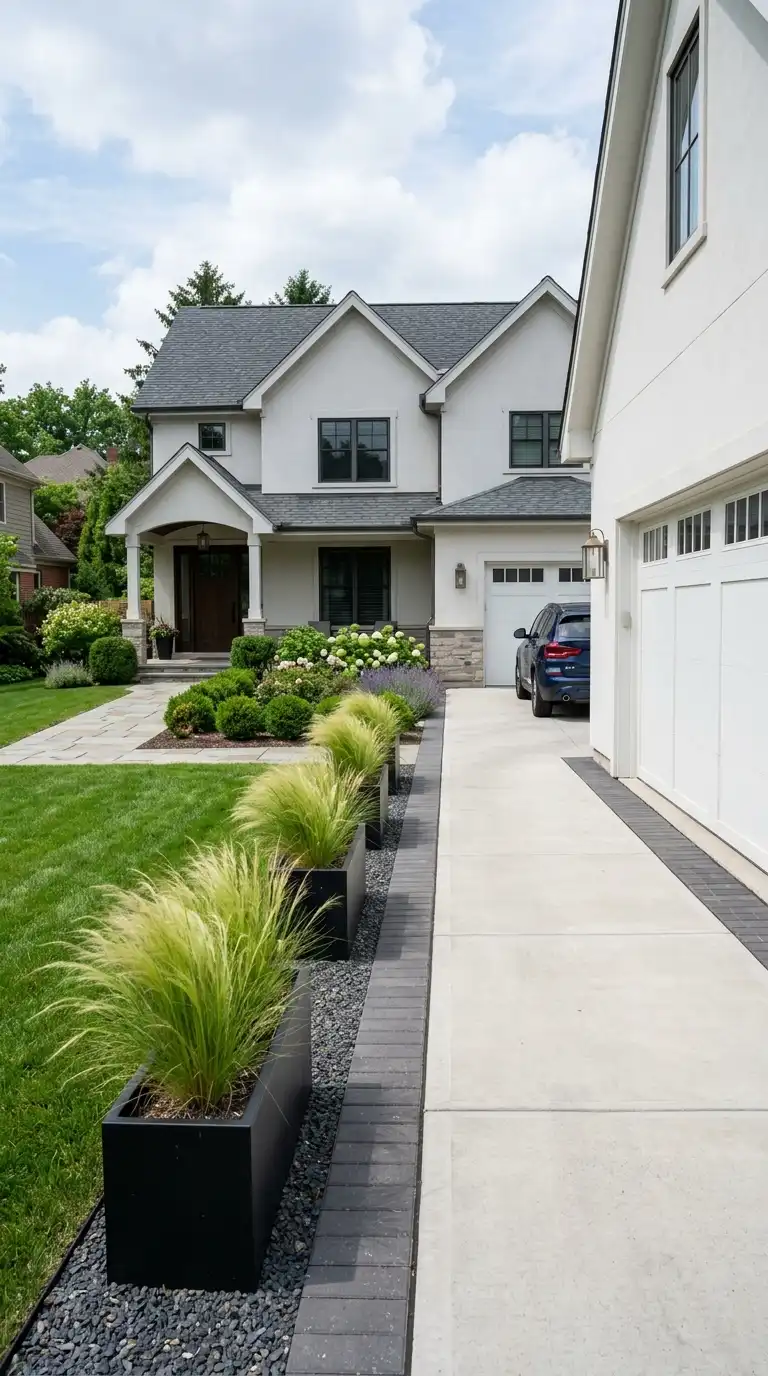
6. Line the Driveway Edge with Identical Long Planters
If the driveway runs directly alongside the garage wall, the edge between asphalt and structure is often harsh. A line of identical long planters placed along the driveway edge softens this transition and adds a rhythmic visual element. Choose planters that are at least 24 inches long and low enough that they do not impede car doors opening. Twelve to 14 inches tall is ideal.
Use the same planter style repeated four, five, or six times down the length of the driveway. The repetition creates a sense of order and intentional design. Fill each planter with the same plant or a simple combination of two plants. For a modern look, use all the same ornamental grass. For a cottage style, use a mix of white annuals and trailing greenery. The key is consistency. Mismatched planters will look cluttered; identical planters in a row look designed. This idea works best on garages where the driveway is highly visible from the street.
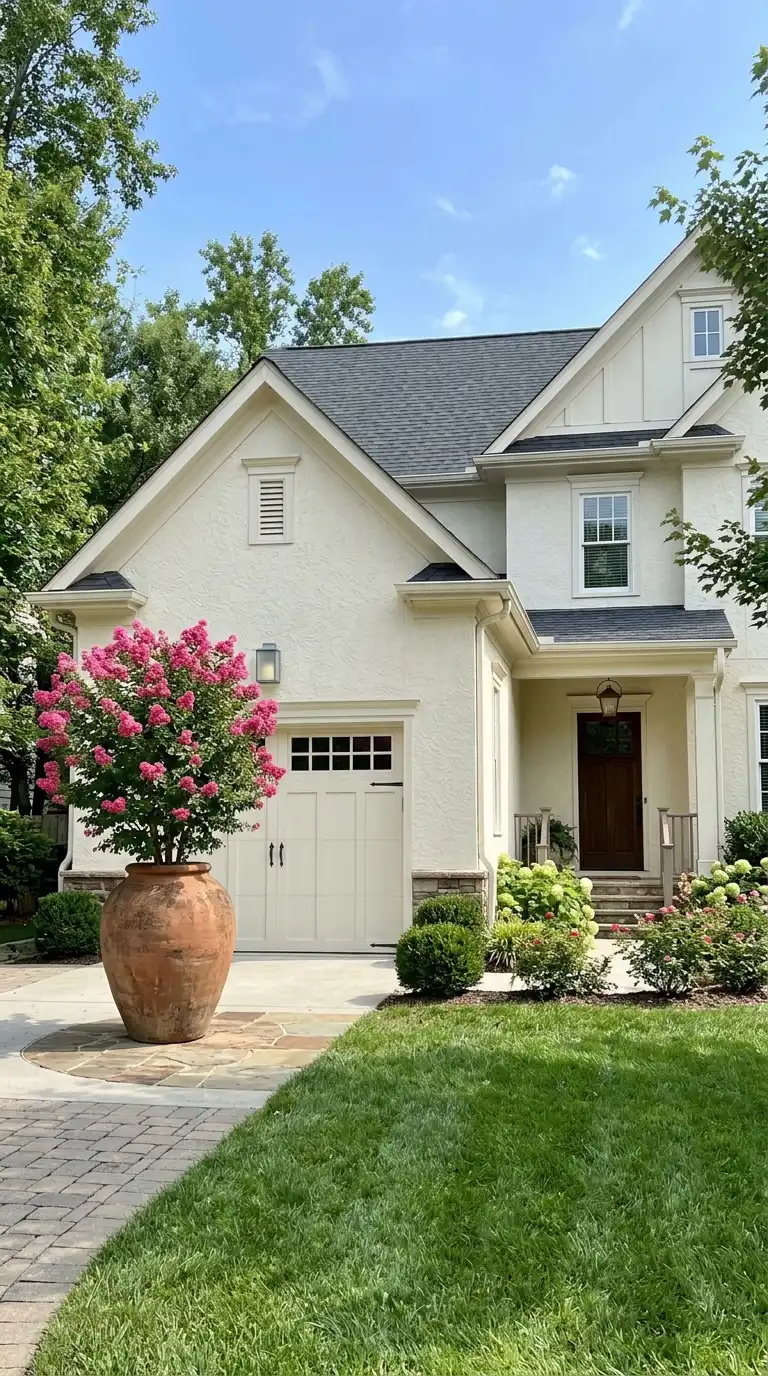
7. Use a Single Oversized Statement Planter Next to the Garage Door
Sometimes less is more. A single, oversized statement planter placed to one side of the garage door creates a focal point without requiring symmetry. This works particularly well when the garage door is off-center or when the front door is nearby and you want to avoid competition. The planter should be large—at least 24 inches in diameter and height—so it reads as intentional rather than accidental.
Choose a planter with strong visual weight. A massive terracotta urn, a hand-thrown ceramic pot, a concrete trough, or a weathered half-barrel all work. The material should relate to the house’s architecture. Fill it with a dramatic plant: a small flowering tree like a dwarf crepe myrtle, a large tropical like a banana plant or canna lily, or a towering ornamental grass like miscanthus. Underplant with trailing annuals for a finished look. This single bold gesture can transform a plain garage facade into a memorable one.
8. Add Rolling Planters for Flexibility on a Shared Driveway
If your garage has a shared driveway or a tight turning radius, permanent planters can be impractical. Rolling planters with casters solve this problem. These mobile containers allow you to move plants aside when you need access for large vehicles, deliveries, or snow removal. They also let you chase the sun or rearrange the look seasonally.
Choose rolling planters with lockable casters so they stay put when you want them to. Self-watering models reduce maintenance. The planters should be heavy enough that they do not tip but light enough that one person can move them. Place them on either side of the garage door during nice weather, then roll them to a protected spot during storms or winter. Fill them with anything from small trees to vegetable gardens. The flexibility makes rolling planters ideal for renters or anyone hesitant to commit to a fixed location.
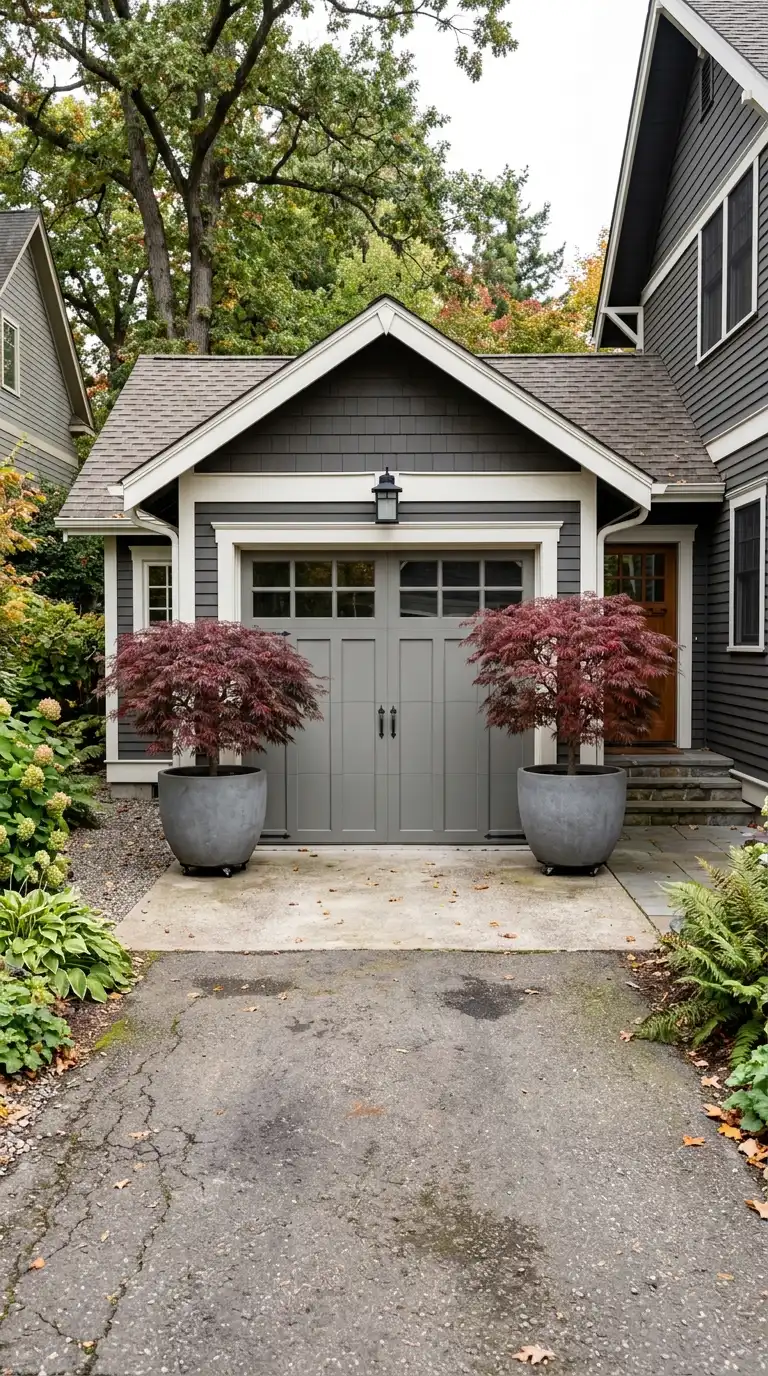
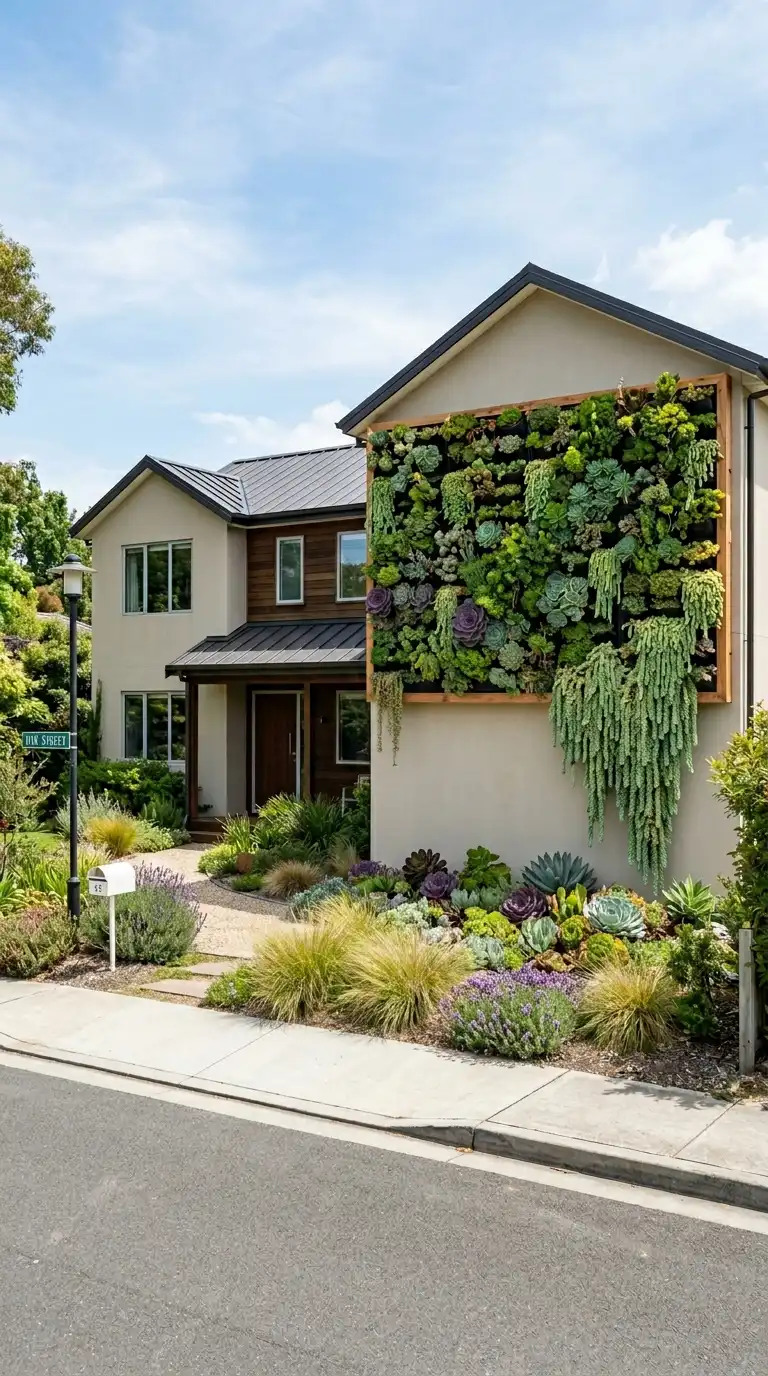
9. Hang a Vertical Container Garden on a Blank Garage Wall
Some garages have large blank walls facing the street—the side of the garage, the area above a walk door, or the space beside the main door. A vertical container garden turns dead wall space into living art. Use a modular vertical planter system, a pallet garden, or a series of wall-mounted pockets. These systems hold multiple small plants in a grid or pattern.
Choose plants that stay compact and do not require deep soil. Succulents, sedums, creeping thyme, dwarf ferns, and small herbs all work well. For seasonal color, use trailing annuals like calibrachoa or lobelia. The vertical garden should be installed at eye level and within reach of a hose or watering can. Avoid blocking windows or light fixtures. When done well, a vertical container garden transforms a blank garage wall into a lush, green feature that draws admiration rather than indifference.
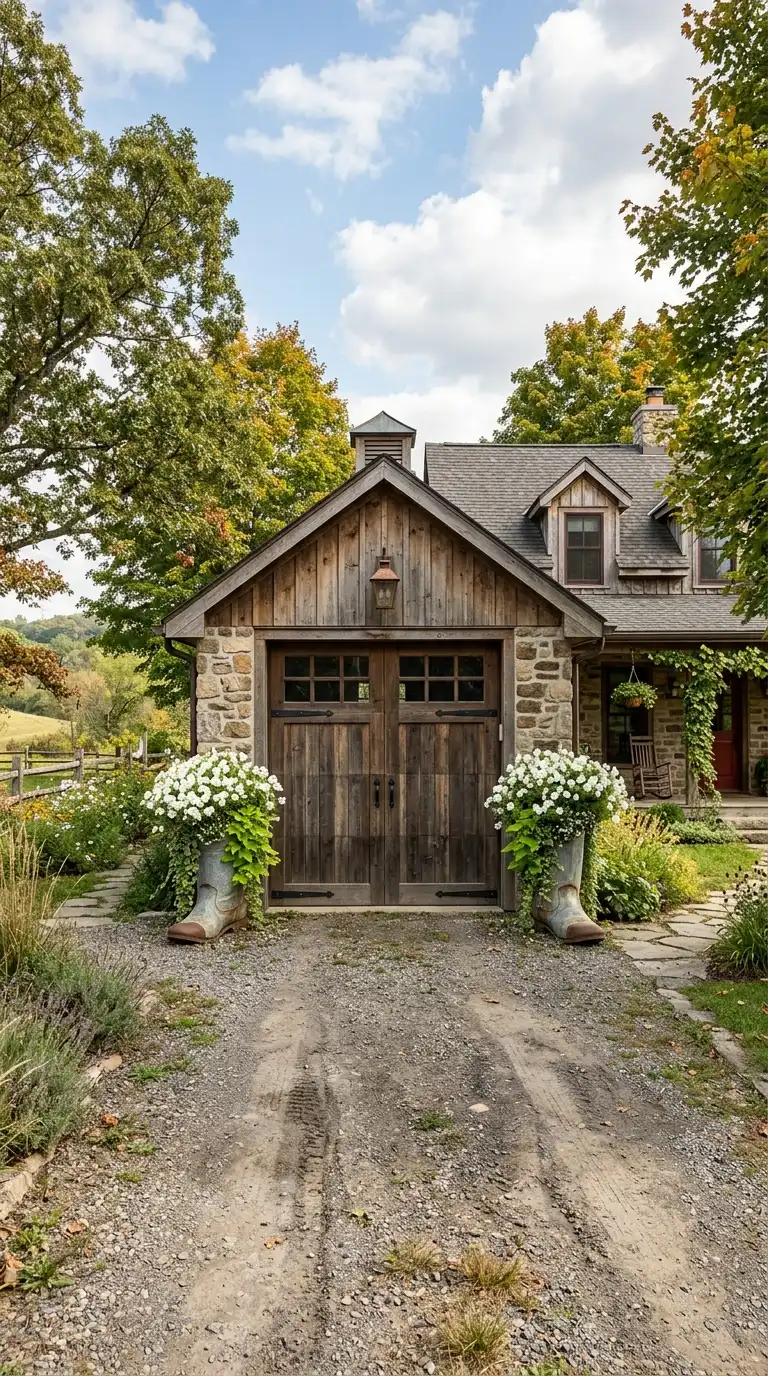
10. Use Boot-Style or Trough Planters for a Rustic Garage
For farmhouse, cottage, or rustic-style homes, boot-style planters or galvanized watering troughs fit perfectly with the garage aesthetic. These containers have a utilitarian charm that echoes the garage’s functional origins. Place a pair of boot planters on either side of the garage door, or use one long galvanized trough as a foundation planter.
Galvanized containers reflect light beautifully and weather to a soft patina over time. Drill drainage holes before planting. Fill them with casual, forgiving plants: ornamental kale, dusty miller, sweet alyssum, or trailing nasturtiums. For a truly rustic look, allow plants to become slightly wild and spilling over the edges. Pair the metal containers with other rustic elements like a wood garage door, barn-style hardware, or a gravel driveway. The cohesion between container and architectural style makes the garage feel authentic rather than forced.
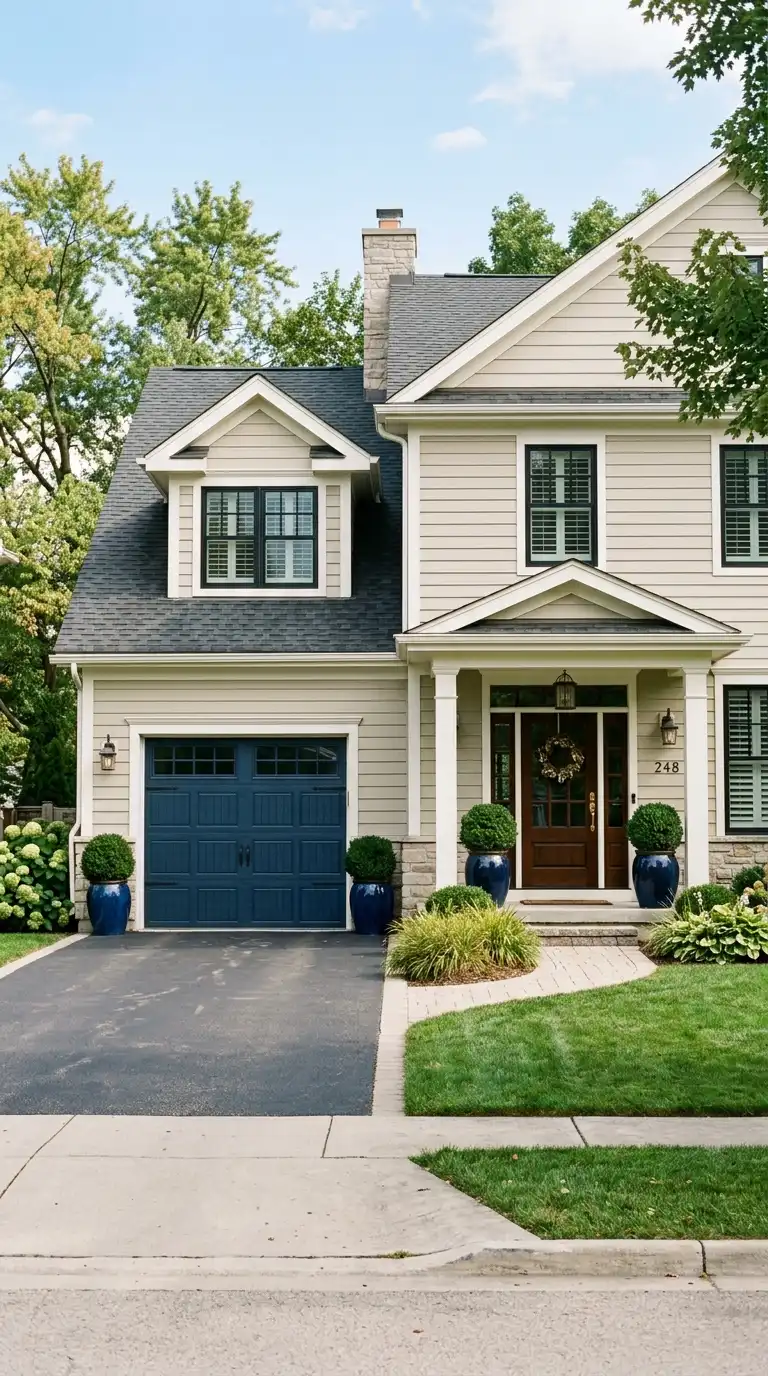
11. Repeat the Front Door Container at the Garage
Cohesion between the garage and the front entrance creates a unified exterior. One of the simplest ways to achieve this is to repeat the same container and plant combination at the garage that you use at the front door. If you have two matching urns with boxwoods at your front door, place two matching urns with boxwoods at your garage door. The repetition signals that both doors belong to the same thoughtful design scheme.
You do not need identical plants—seasonal variations are fine—but the container style, size, and material should match. If the front door uses dark blue glazed pots, use the same dark blue glazed pots at the garage. This visual echo ties the two ends of the house together, especially on homes where the garage is attached and visible from the same street view. It also reduces decision fatigue: once you have found a container and plant you love, using it twice is efficient and effective.
12. Use Seasonal Container Swaps for Year-Round Interest
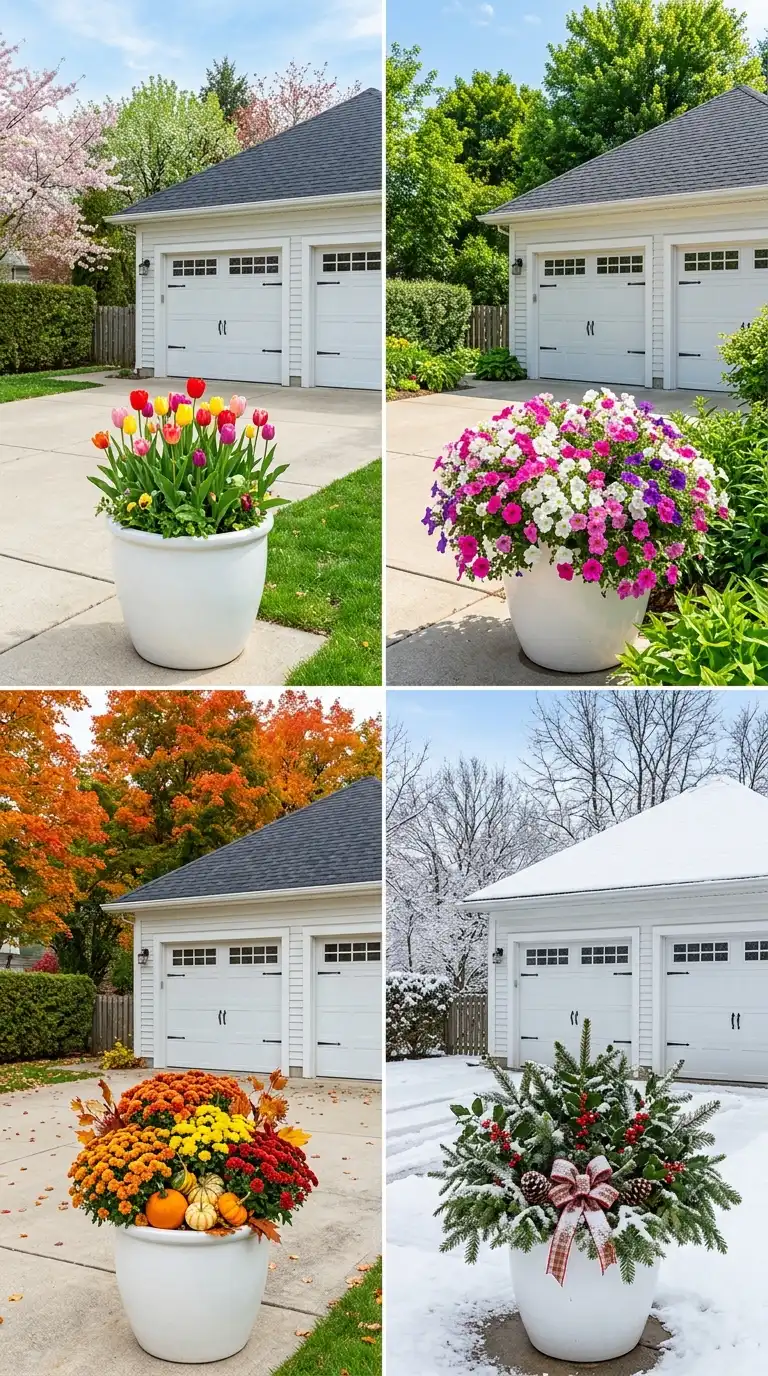
Containers are not static. One of their greatest advantages is the ability to change them with the seasons. A garage that looks fresh in spring can look tired by winter if you leave the same faded annuals. Plan four seasonal container changes: spring bulbs and cool-season flowers, summer annuals, fall mums and ornamental peppers, and winter evergreens with berries or birch branches.
Keep a set of neutral containers that work year-round—terra cotta, black, white, or galvanized metal. Store off-season plants in a compost pile or nursery area. For spring, plant tulips, daffodils, and pansies. For summer, use petunias, calibrachoa, or bougainvillea. For fall, use mums, ornamental kale, and miniature pumpkins. For winter, use cut evergreens, red twig dogwood branches, and white birch logs. The rotating display signals that your home is cared for in every season. A garage with festive winter containers or bright spring planters stops being a garage and starts being a welcome statement.
Key Elements for Container Garage Curb Appeal
Scale: Containers must be large enough to be seen from the street. Small pots look like clutter. Symmetry: Matching containers on both sides of the door create balance. Repetition: Using the same container style multiple times creates rhythm. Cohesion: Container materials and colors should relate to the house. Seasonal updating: Change plants to keep the garage looking fresh. Placement: Position containers where they soften hard edges and frame the door.
Conclusion
Improving your garage’s curb appeal with containers is one of the most flexible, forgiving, and rewarding approaches available. Unlike permanent landscaping, containers can be moved, swapped, and experimented with at low cost and low risk. Whether you choose to flank the garage door with matching urns, line the driveway edge with long planters, hang baskets from wall sconces, install a vertical garden on a blank wall, use rolling planters for flexibility, or commit to seasonal swaps for year-round interest, the key is intentionality. Containers should look purposeful, not accidental. They should frame the garage, soften its hard edges, and draw the eye in a pleasing way.
Start with one idea that fits your budget and skill level. A single pair of matching planters on either side of the garage door is an easy win. From there, add more containers as you gain confidence. The beauty of container gardening is that there is no permanent mistake. If a plant fails, replace it. If a planter feels wrong, move it. With these twelve container garage exterior ideas, you can turn your garage from a utilitarian necessity into a warm, welcoming, and beautifully framed part of your home’s facade.