12 Garage Exterior Light Ideas
The garage is often the largest single element on a home’s front facade, yet it is frequently underlit. Poor lighting leaves the garage looking like a dark cave at night, while thoughtful lighting transforms it into a welcoming, secure, and architecturally significant feature. Garage lighting serves multiple purposes: safety for arriving and departing vehicles, security to deter intruders, and aesthetics to enhance curb appeal after dark. From flush-mount ceiling lights to dramatic uplighting, from motion-sensor floods to decorative sconces, here are twelve garage exterior light ideas that will illuminate your garage and elevate your home’s nighttime presence.
1. Install Matching Wall Sconces on Both Sides of the Garage Door
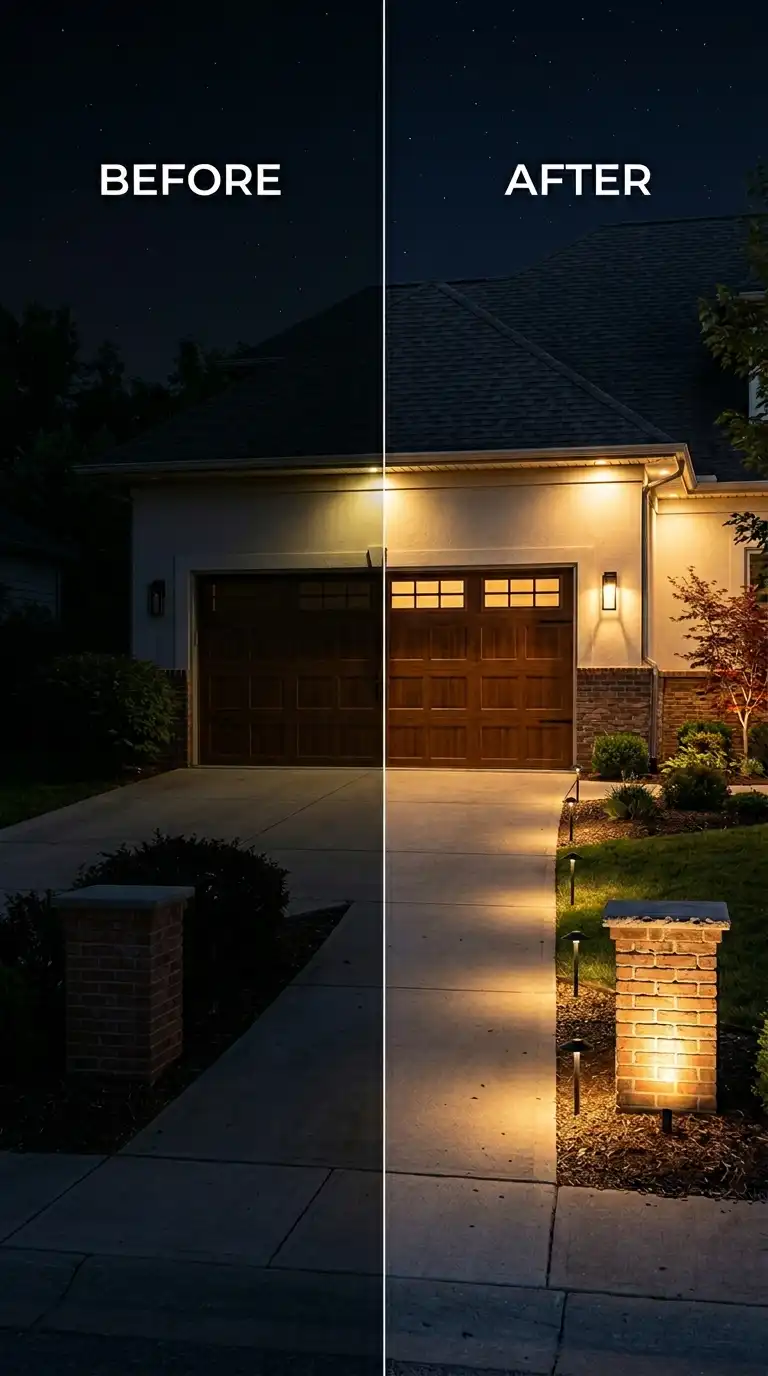
Symmetry is the foundation of good garage lighting. Two identical wall sconces placed on either side of the garage door create balance, frame the entrance, and provide even illumination across the door surface. The sconces should be mounted at a height where the light source sits at or slightly above eye level—typically 66 to 72 inches from the ground. This height prevents glare while casting light outward and downward.
Choose sconces that match your home’s architectural style. Lantern-style fixtures in black or bronze suit traditional and colonial homes. Clean, linear sconces in brushed nickel or matte black work for modern and contemporary houses. Cup-style or gooseneck fixtures fit farmhouse and craftsman styles. The key is proportion: sconces should be roughly one-quarter to one-third the height of the garage door. A nine-foot garage door pairs well with 24- to 30-inch sconces. Ensure the fixtures are rated for exterior use and have sealed gaskets to prevent moisture ingress.
2. Add a Flush-Mount Ceiling Light Under the Garage Overhang
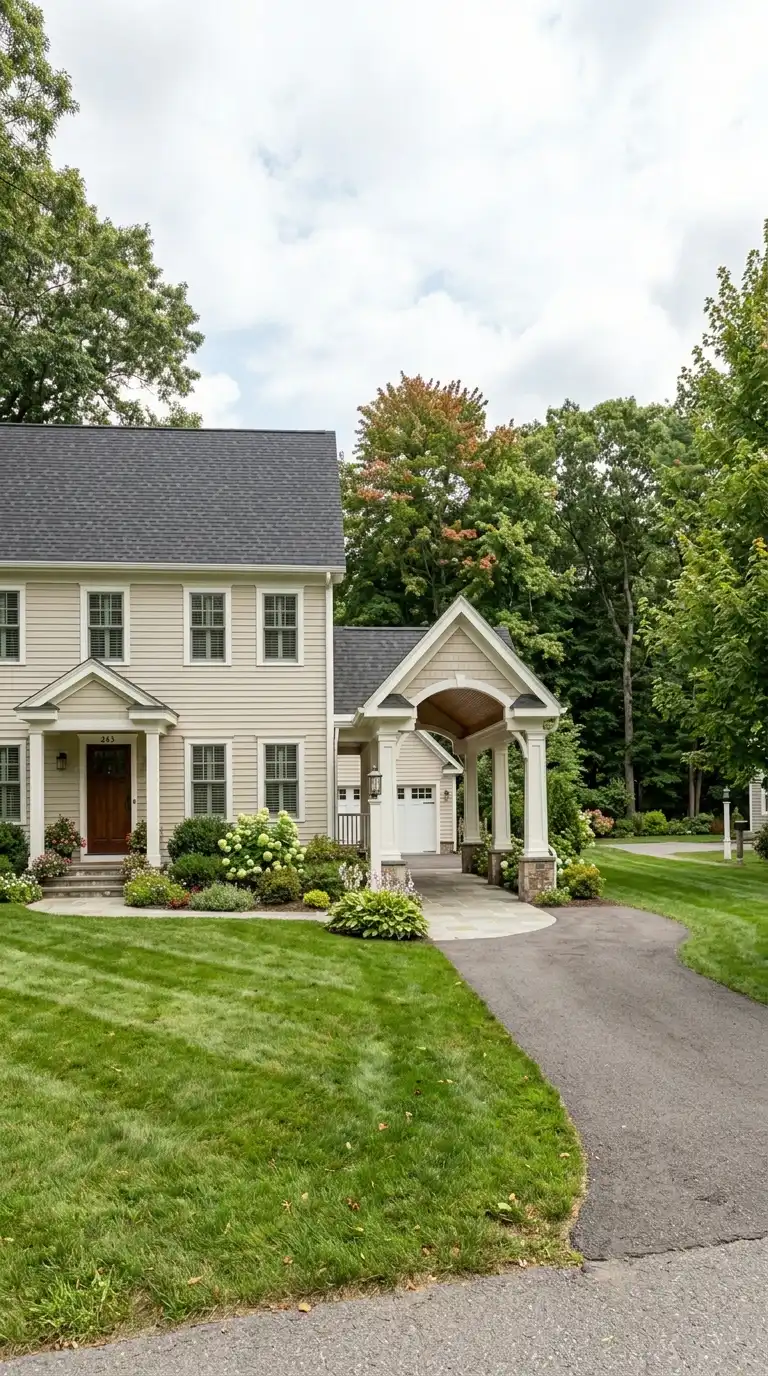
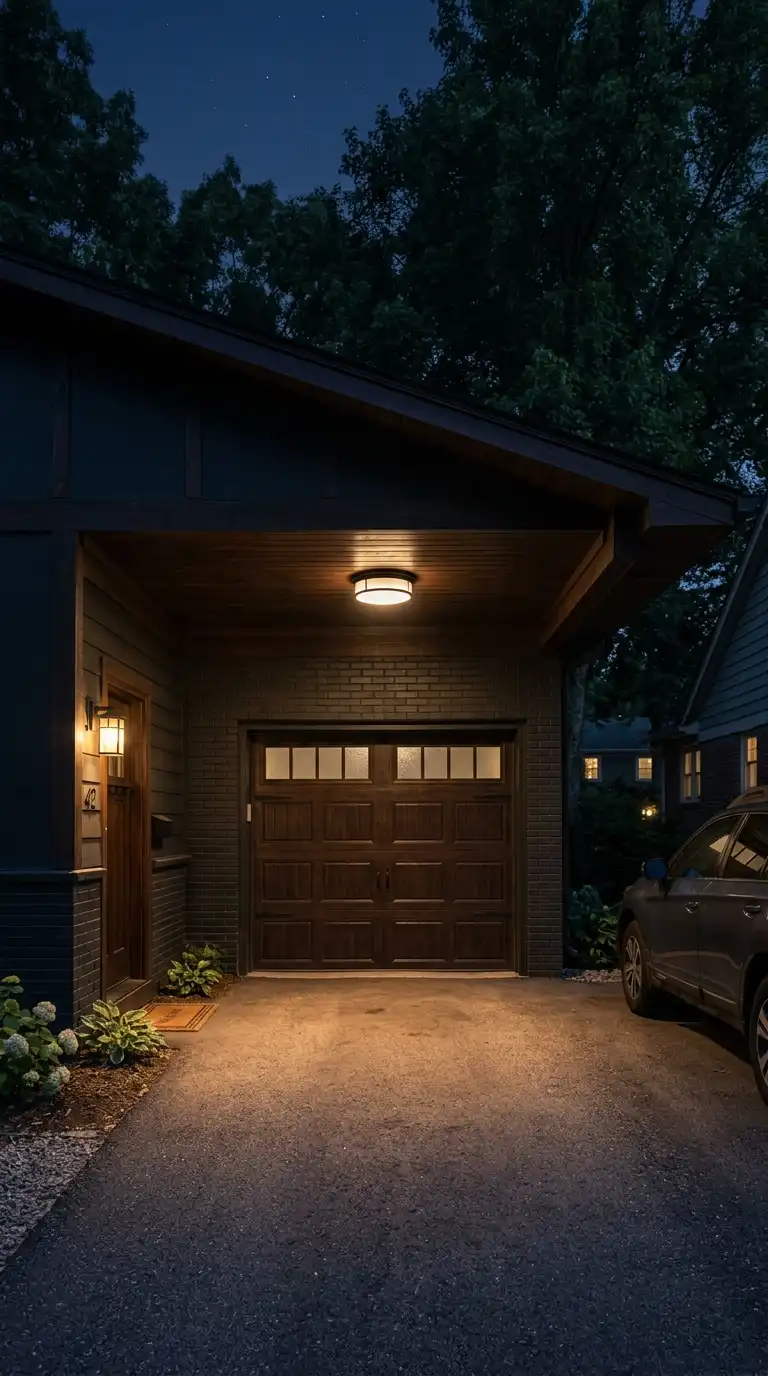
Many garages have a small overhang or soffit above the door. This recessed area is the perfect location for a flush-mount or semi-flush-mount ceiling light. Unlike sconces that cast light sideways, a ceiling fixture casts light straight down, illuminating the area directly in front of the garage door where drivers and pedestrians need it most.
Choose a fixture that is low-profile enough to fit under the overhang without protruding awkwardly. Flush-mount fixtures sit completely against the ceiling; semi-flush fixtures hang down a few inches. Both work well. The fixture should be wide enough to spread light across the full width of the door approach—12 to 16 inches in diameter is typical. Use a frosted or opal glass diffuser to soften the light and reduce harsh shadows. This idea works especially well on garages with deep overhangs or covered entryways. It is also an excellent solution when wall space on either side of the door is limited due to windows, narrow side yards, or adjacent walls.
3. Use Gooseneck Lights for a Farmhouse or Industrial Look
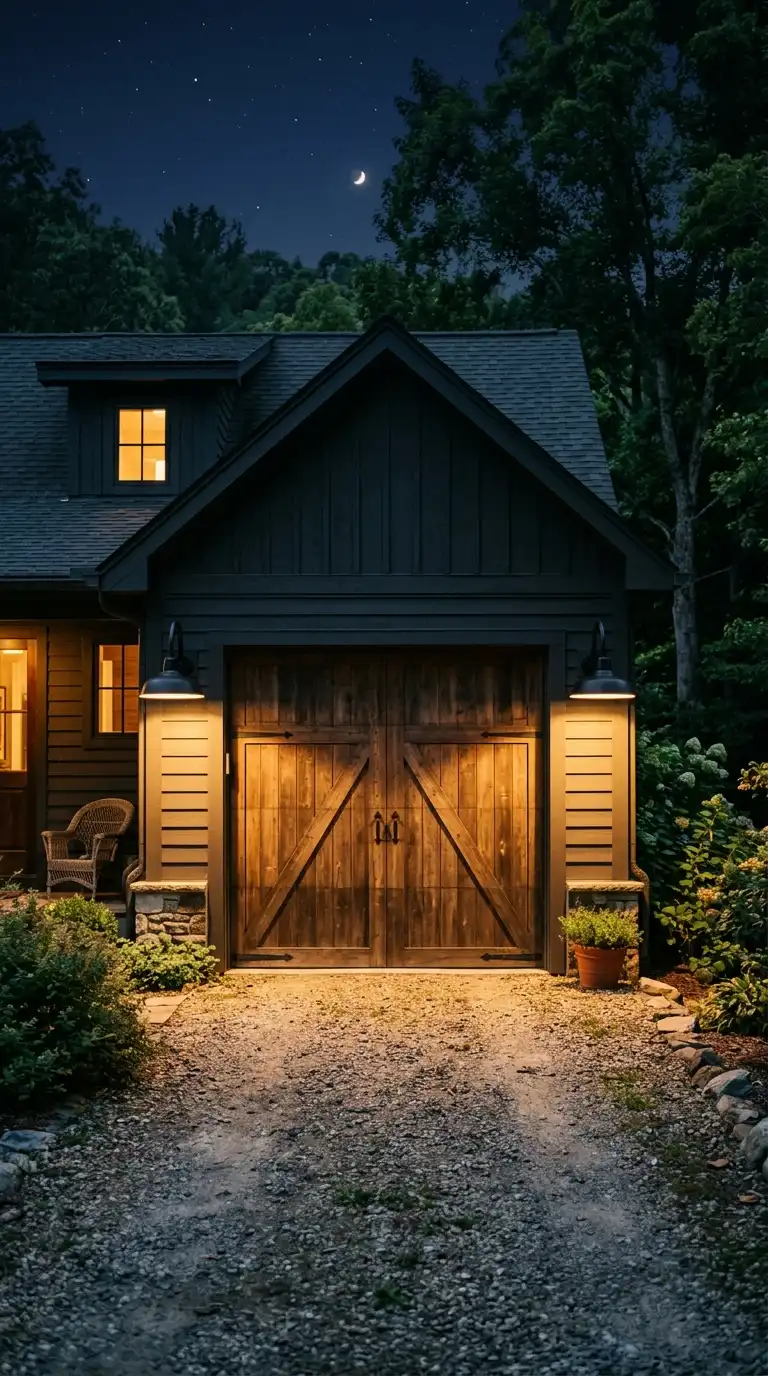
Gooseneck lights have experienced a well-deserved resurgence in exterior design. These fixtures feature a curved metal arm that extends outward from a wall mount, with a shade that directs light downward. The silhouette is distinctive and charming, evoking historic gas stations, barns, and early 20th-century commercial buildings. Gooseneck lights work exceptionally well on farmhouse, craftsman, and industrial-style garages.
The extended arm of a gooseneck light allows you to position the light source several inches to a foot away from the wall. This creates beautiful shadow patterns and highlights the texture of the garage door. Choose a shade shape that suits your style: deep dome shades cast concentrated downward light; shallow saucer shades spread light more broadly. Galvanized metal, copper, and matte black are popular finishes. Mount one gooseneck on each side of the garage door, or use a single larger gooseneck centered above the door for a dramatic statement. The curved arm adds visual interest even during daylight hours.
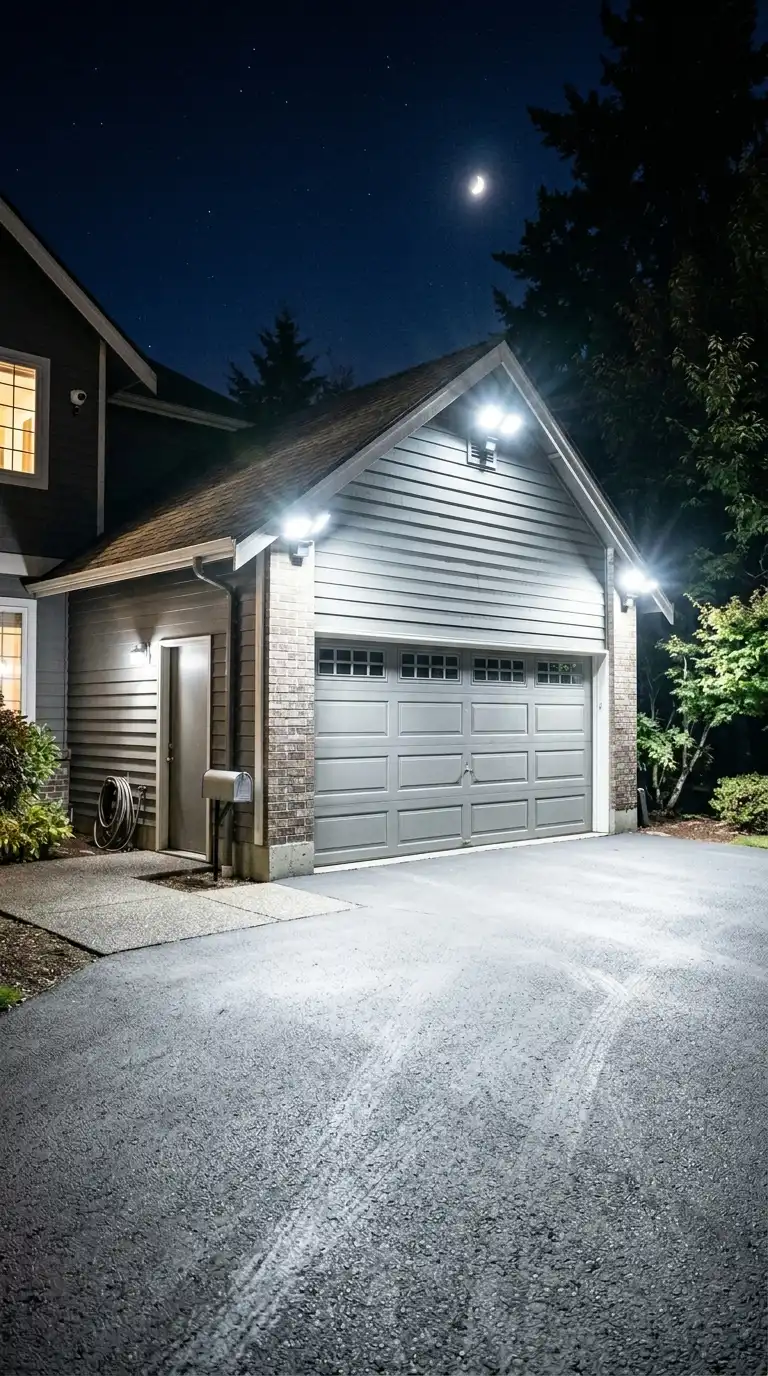
4. Install Motion-Sensor Flood Lights for Security and Convenience
While decorative lighting sets the mood, motion-sensor flood lights provide essential security and practical convenience. These fixtures activate when they detect movement, illuminating the garage area brightly for a set period before shutting off. This deters potential intruders and helps you see when arriving home after dark or taking out the trash.
Mount flood lights high on the garage wall—eight to ten feet above ground—or under the eaves. Position them to cover the driveway, the garage door, and any side entrances. Avoid aiming lights directly at neighbors’ windows or into the street where they could blind drivers. LED flood lights are energy-efficient and long-lasting. Choose fixtures with adjustable sensitivity and duration settings. For a polished look, select flood lights with housings that match your other exterior fixtures rather than generic white plastic models. Some flood lights now include dusk-to-dawn sensors so they only activate at night, saving energy during daylight hours.
5. Add Pathway Lights Along the Garage Driveway Approach
The driveway leading to the garage is often overlooked in lighting plans. Pathway lights placed along the edge of the driveway guide the eye and the feet from the street to the garage door. They also define the driveway edge, reducing the risk of stepping off into the lawn or garden in the dark.
Choose low-voltage landscape lights on stakes, typically 15 to 24 inches tall. Space them six to eight feet apart along both sides of the driveway if space allows, or along one side if the driveway abuts the house or property line. The lights should cast light downward onto the pavement rather than outward into the sky. Shielded fixtures that meet dark-sky guidelines are widely available. Brass, copper, and black aluminum fixtures weather well. Use warm-white LEDs in the 2700K to 3000K range to match the color temperature of your garage sconces. Pathway lights create a welcoming runway effect that makes the garage feel like a deliberate destination rather than a blank wall at the end of a dark strip of concrete.
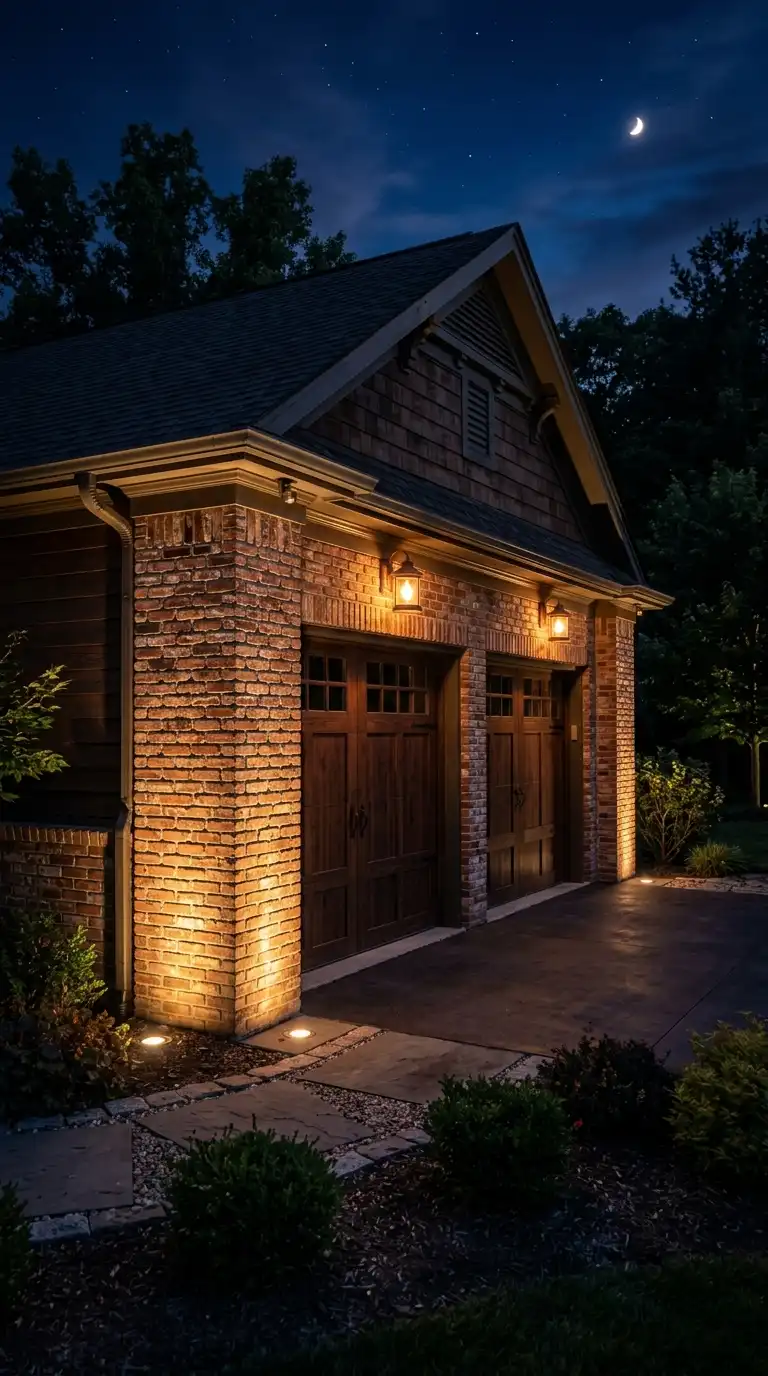
6. Use Uplighting to Highlight Garage Architectural Features
Most garage lighting shines downward. Uplighting flips this convention, casting light upward from ground-level fixtures to highlight architectural details. This technique draws attention to the garage’s best features: brick or stone accents, decorative gables, columns, pilasters, or interesting rooflines.
Install well lights or in-grade lights flush with the ground or set into low-profile housings. Aim them upward at a shallow angle to wash light across the garage wall. Use narrow-beam fixtures to accent specific features like a brick pillar or wide-beam fixtures to wash a large area. LED well lights are available in various color temperatures and beam spreads. Uplighting is most effective when used sparingly—one or two fixtures that highlight a single dramatic feature rather than lighting the entire garage from below. Pair uplighting with downlighting from sconces or flood lights for a layered, professional lighting scheme that adds depth and drama.
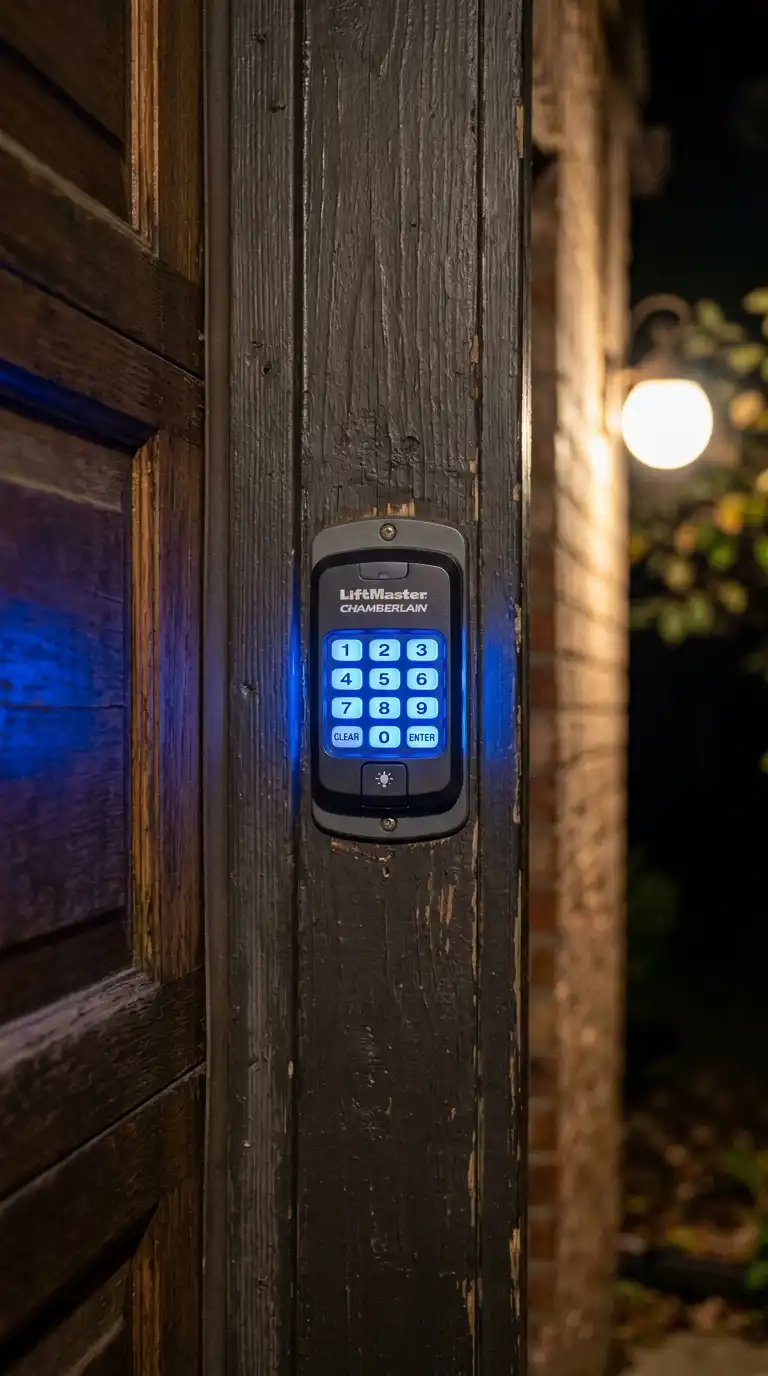
7. Install a Lighted Garage Door Opener Keypad
A lighted keypad for your garage door opener is a small addition that makes a big difference in usability and safety. The keypad illuminates when you press a button or when motion is detected, allowing you to see the numbers clearly at night. This eliminates fumbling in the dark or using your phone’s flashlight while balancing groceries.
Most lighted keypads are wireless and mount on the garage door jamb or on the wall next to the door. Choose a model with backlit buttons and a durable, weather-sealed housing. Some keypads have adjustable brightness settings. While a keypad is not a decorative light fixture, the illumination it provides at the exact point where you need to see—right next to the garage door—is invaluable. It also adds a subtle glow that signals technology and modernity. For a cohesive look, choose a keypad housing color that matches your garage door hardware or wall sconces.
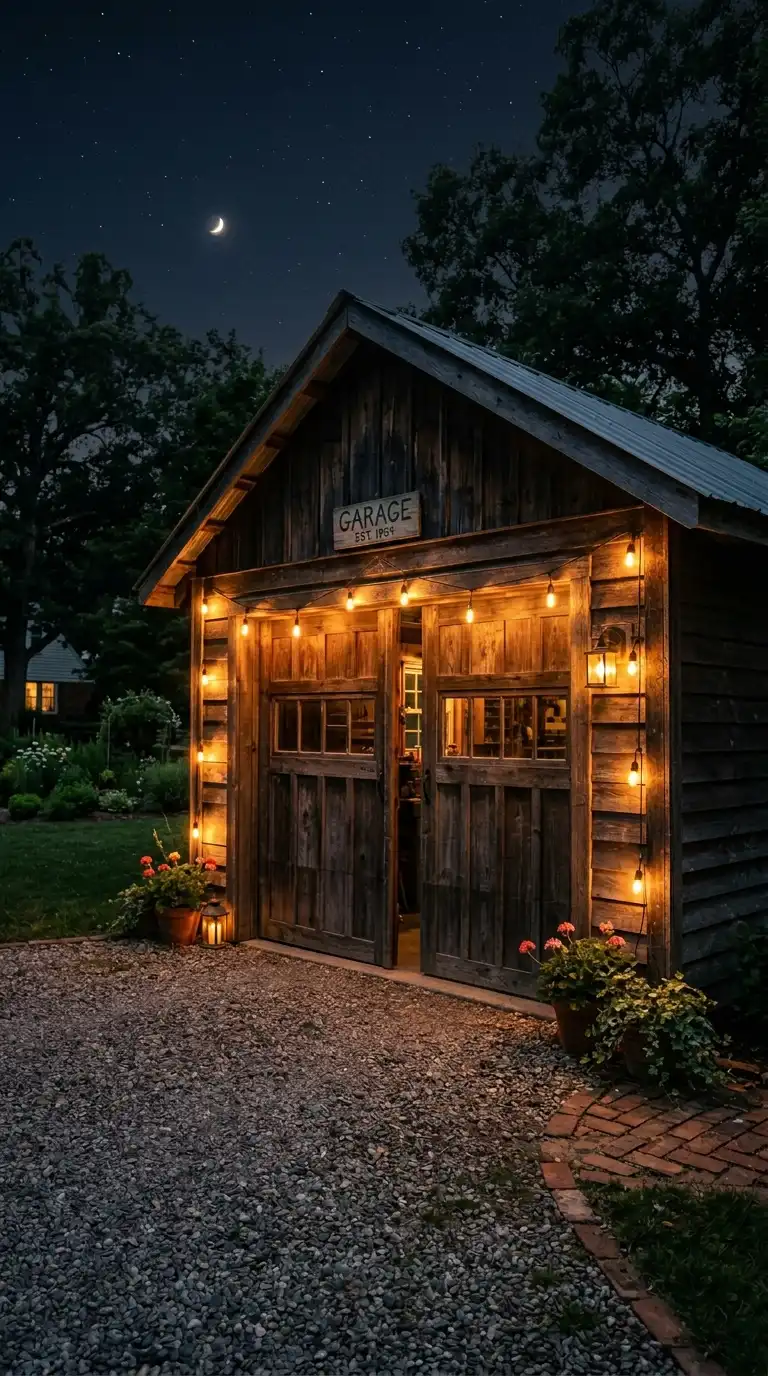
8. Use String Lights Across the Garage Door Opening
For a festive, welcoming, or bohemian look, string lights hung across the garage door opening add charm and warmth. This idea works especially well on garages that are used for entertaining, on detached garages that serve as workshops or guest houses, or on homes with outdoor living spaces adjacent to the garage.
Install cup hooks or small eyelets into the garage door frame or the surrounding wall. Hang weatherproof string lights from one side of the opening to the other, allowing a slight sag for a relaxed look. Use vintage-style Edison bulbs in warm white or amber for a nostalgic glow. LED string lights are energy-efficient and long-lasting. The string should be high enough that it does not interfere with the garage door opening and closing—at least seven feet above the driveway. String lights can be left up year-round or installed seasonally for summer parties and holiday gatherings. They transform the utilitarian garage opening into a glowing portal.
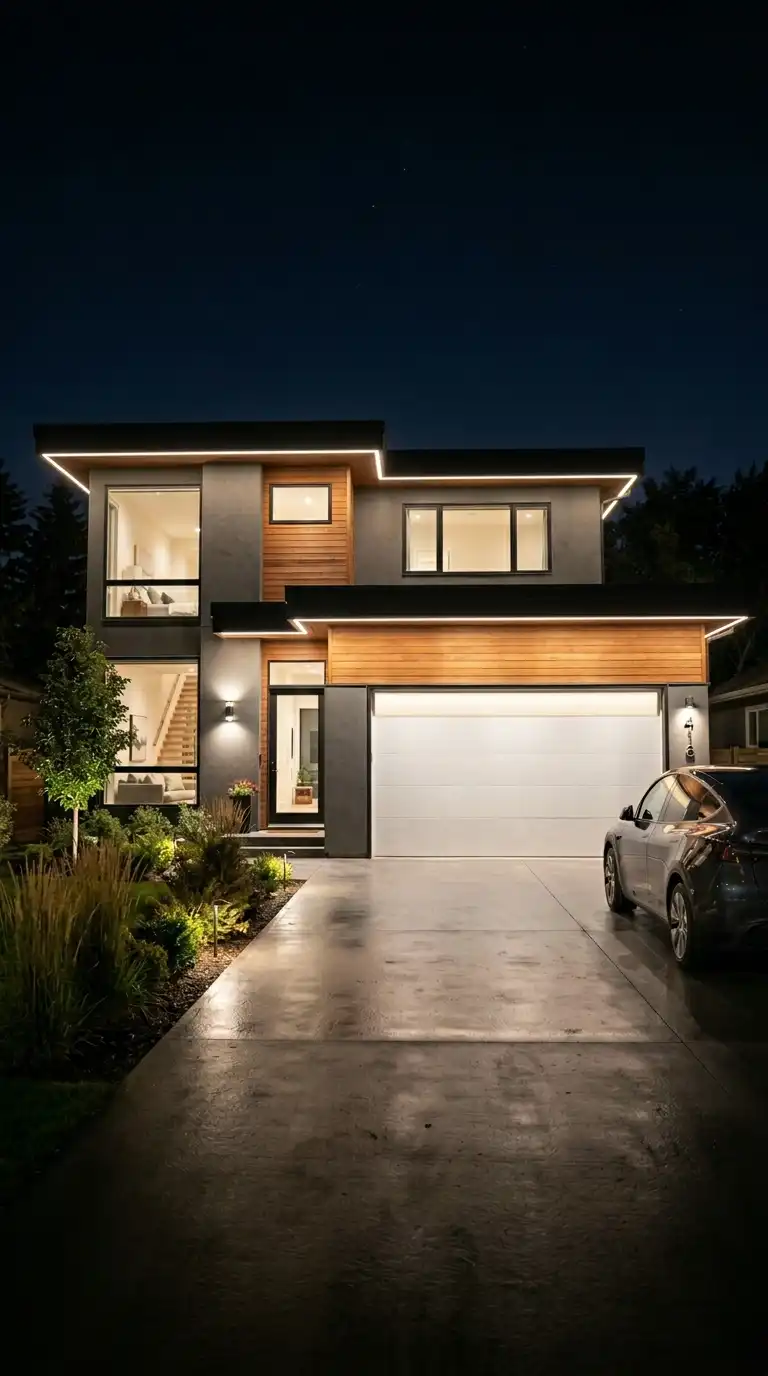
9. Add Under-Eave Soffit Lights for Widespread Ambient Illumination
Soffit lights are recessed or surface-mounted fixtures installed under the eaves of the garage roof. They cast light downward and outward, creating a broad pool of ambient illumination that covers the entire garage door and the area in front of it. This is an excellent solution when wall space on either side of the door is limited or when you want a clean, uncluttered look.
Recessed soffit lights are virtually invisible during the day, making them ideal for modern and minimalist homes. Surface-mounted puck lights or linear LED strips are more visible but easier to install as retrofits. Space soffit lights every four to six feet along the eave above the garage door. Use fixtures with downward-facing lenses to minimize glare and light trespass. The result is even, shadow-free illumination that makes the garage feel spacious and secure. Soffit lights pair beautifully with wall sconces or can stand alone as the primary garage lighting.
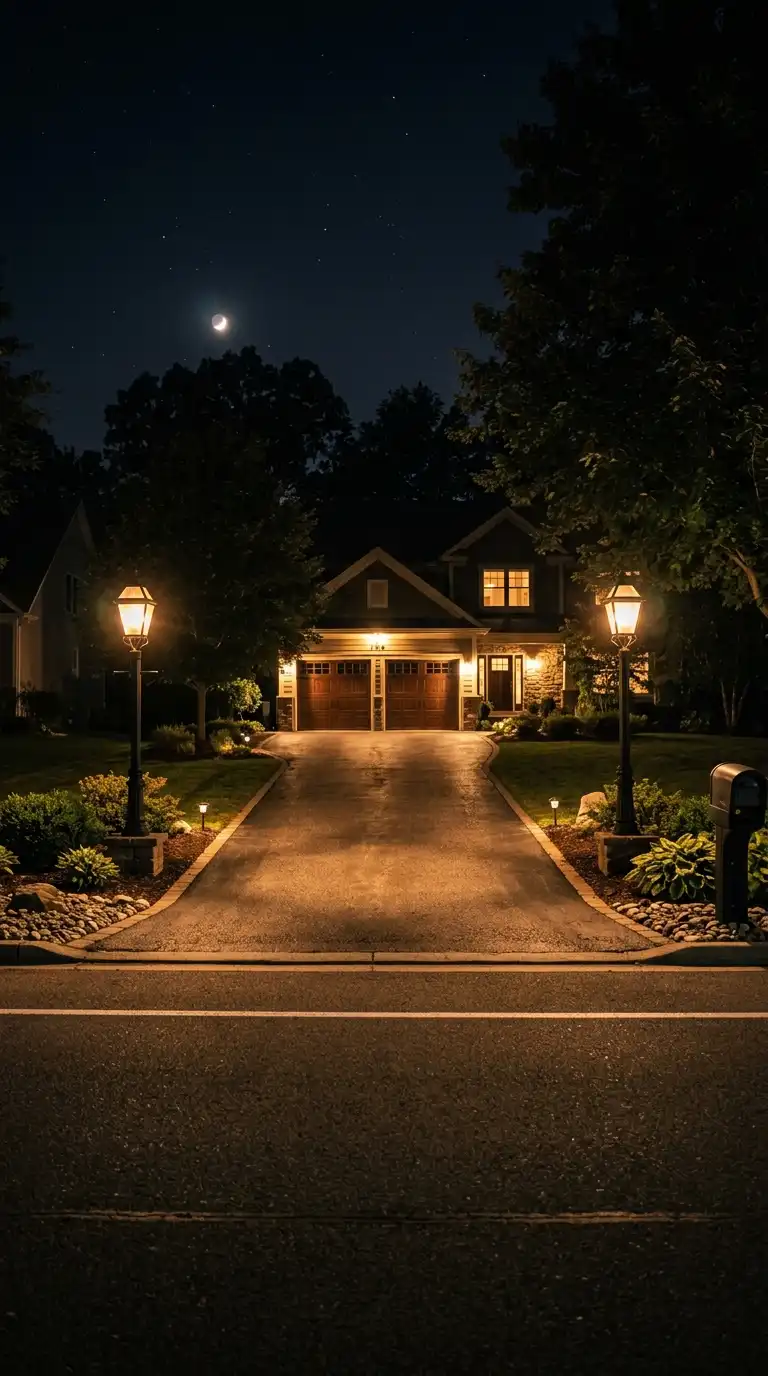
10. Use Post Lights at the End of the Driveway
Post lights placed at the end of the driveway serve as both navigation aids and decorative markers. They signal the transition from public street to private property and provide illumination for the final approach to the garage. A single post light on one side of the driveway entry works well; two matching post lights on both sides create a grander, more formal entrance.
Choose post lights that are proportional to the driveway width and the scale of the house. A typical post is 6 to 8 feet tall with a luminaire on top. Materials include aluminum, brass, copper, and fiberglass. The light should be shielded to direct illumination downward onto the driveway rather than outward into the street or neighbor’s property. LED post lights are energy-efficient and require less maintenance than incandescent versions. For a cohesive look, choose a post light finish that matches your garage sconces or house numbers. The post light becomes a landmark that makes your home easy to find at night.
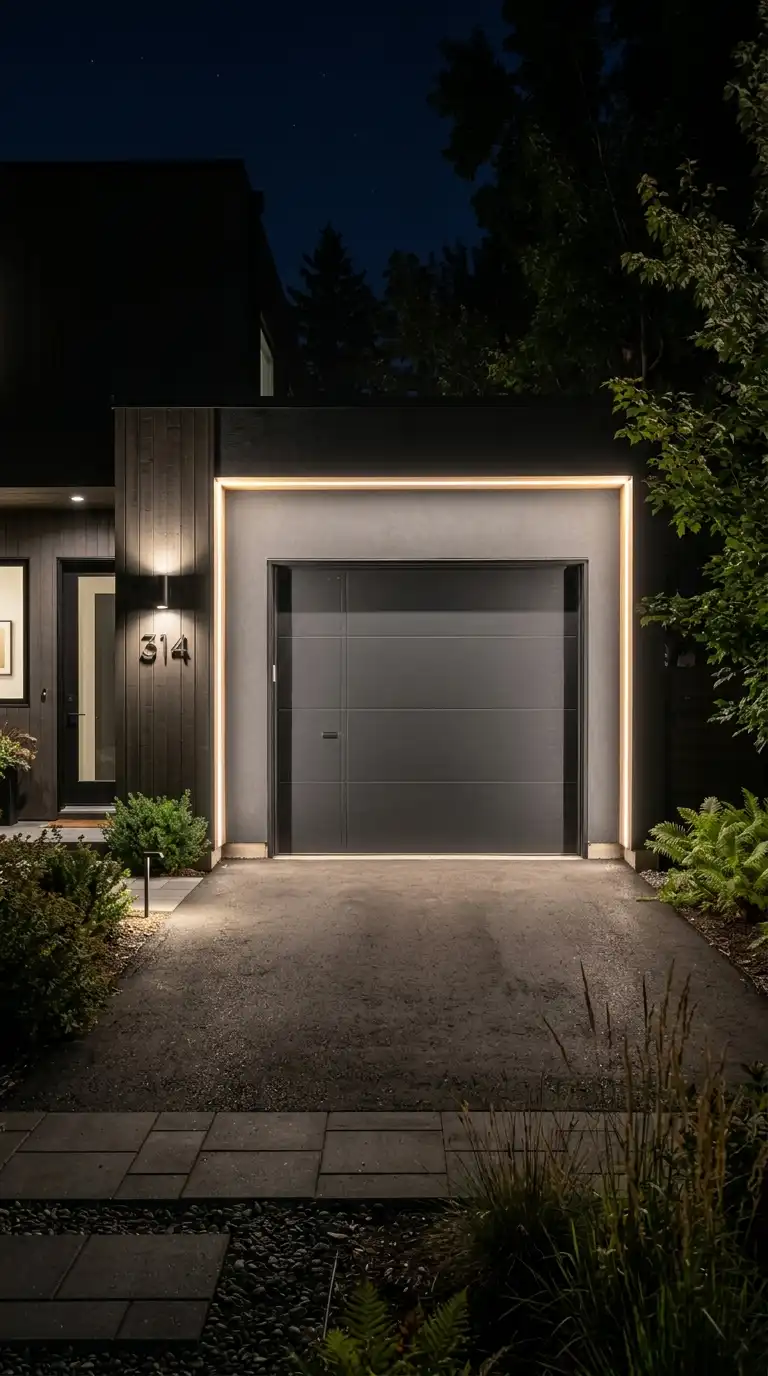
11. Install Strip Lighting Along the Garage Door Track
For a thoroughly modern or industrial look, linear LED strip lights installed along the garage door track or the surrounding frame create a dramatic, architectural effect. The continuous line of light outlines the garage door opening, making it a glowing geometric feature after dark.
Use weatherproof LED strip lights with a high IP rating for exterior use. Mount the strips along the inside edges of the garage door frame, or attach them to the outside of the frame for a bolder look. The light should be directed inward toward the door or outward away from the house, not directly into the eyes of approaching drivers. Choose a warm color temperature (2700K to 3000K) for a welcoming feel or a cooler temperature (4000K to 5000K) for a high-tech, contemporary aesthetic. Dimmable strips allow you to adjust the brightness. This idea works best on garages with clean, simple architecture where the linear light becomes a design feature rather than an afterthought.
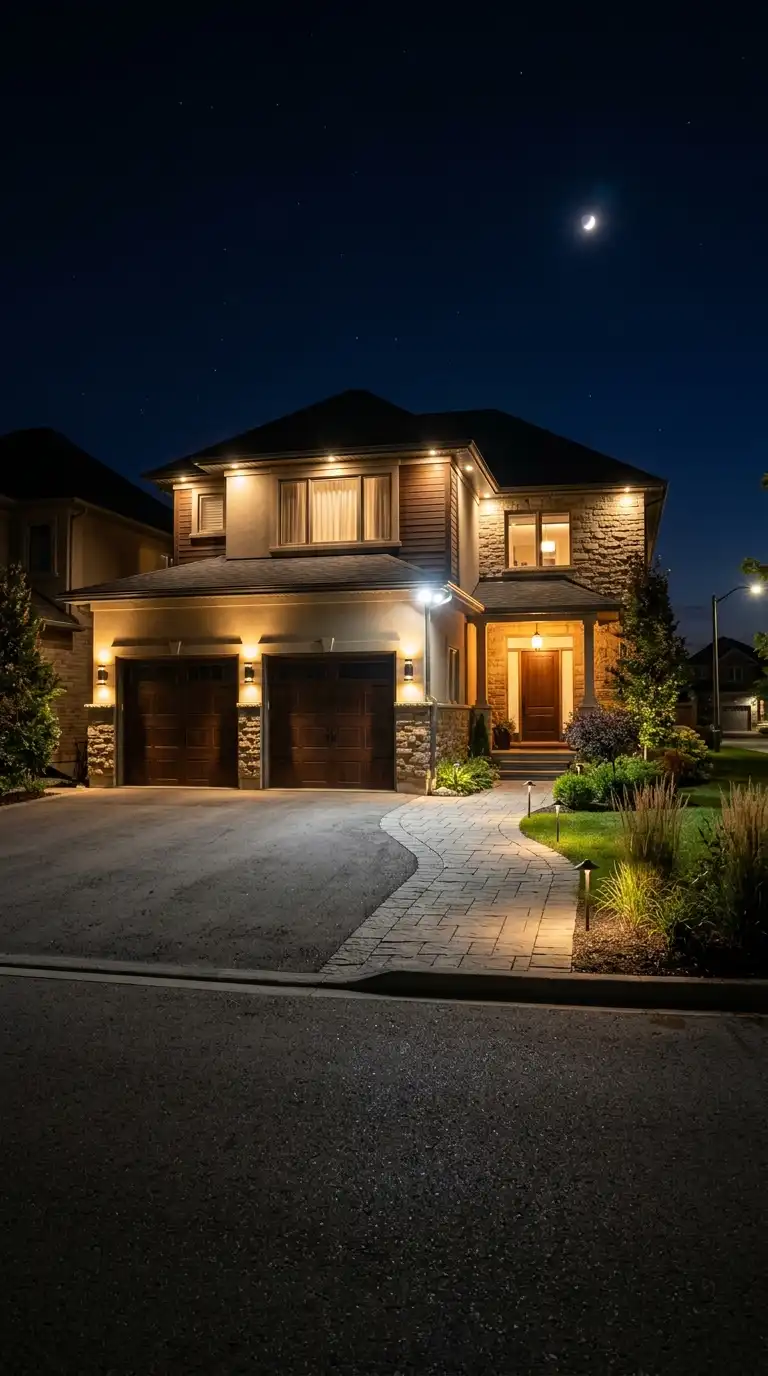
12. Combine Multiple Light Layers for Depth and Flexibility
The most successful garage lighting schemes do not rely on a single fixture type. They layer multiple light sources to create depth, flexibility, and redundancy. A layered approach might include wall sconces for decorative framing, soffit lights for ambient fill, pathway lights for guidance, and motion-sensor floods for security. Each layer serves a different purpose, and together they create a rich, professional nighttime appearance.
Design your layered scheme by considering how the garage is used. Do you arrive by car late at night? Motion-sensor floods provide safety. Do you sit on the driveway or in the garage with the door open? String lights or dimmable sconces create ambiance. Do you want the garage to look beautiful when viewed from the street? Uplighting and decorative sconces deliver curb appeal. Use multiple lighting circuits or smart bulbs so you can control each layer independently. A single switch might turn on the sconces for evening ambiance; a motion sensor activates the floods when you arrive home. Layered lighting transforms the garage from a one-note functional space into a dynamic, responsive part of your home.
Key Elements for Garage Exterior Lighting
Symmetry: Matching fixtures on both sides of the door create balance. Proportion: Fixtures should be appropriately sized for the garage door. Layering: Combine ambient, task, and accent lighting for depth. Color temperature: Use consistent warm white (2700K-3000K) for a welcoming feel. Placement: Mount fixtures at heights that prevent glare and provide even coverage. Security: Include motion-sensor or dusk-to-dawn lights for safety. Style: Match fixture designs to your home’s architectural character.
Conclusion
Improving your garage’s exterior lighting is one of the most impactful changes you can make for curb appeal, security, and functionality. Unlike painting or landscaping, lighting works both day and night—decorative fixtures add style during daylight hours and transform the facade after dark. Whether you choose to install matching wall sconces on either side of the garage door, add a flush-mount ceiling light under the overhang, use gooseneck lights for farmhouse charm, install motion-sensor floods for security, add pathway lights along the driveway, use uplighting to highlight architectural features, install a lighted keypad for convenience, hang string lights for a festive feel, add under-eave soffit lights for ambient illumination, use post lights at the driveway entrance, install strip lighting along the door track, or combine multiple layers for depth and flexibility, the key is intentional design. Thoughtful lighting makes the garage feel like an integral part of your home rather than an afterthought. With these twelve garage exterior light ideas, you can illuminate your way home safely and beautifully every night.