
9 Garage Extension Cord Storage Ideas
Extension cords are essential in any garage. They power tools, lights, holiday decorations, and outdoor equipment. Yet extension cords are notoriously difficult to store. They tangle, they kink, they become nests of frustration. A loose cord thrown on a hook becomes a snarled mess the next time you need it. Proper extension cord storage keeps cords untangled, accessible, and protected from damage. From simple DIY solutions to commercial cord reels, from wall-mounted racks to portable caddies, here are nine garage extension cord storage ideas that will bring order to your garage.
1. Install a Retractable Cord Reel on the Ceiling
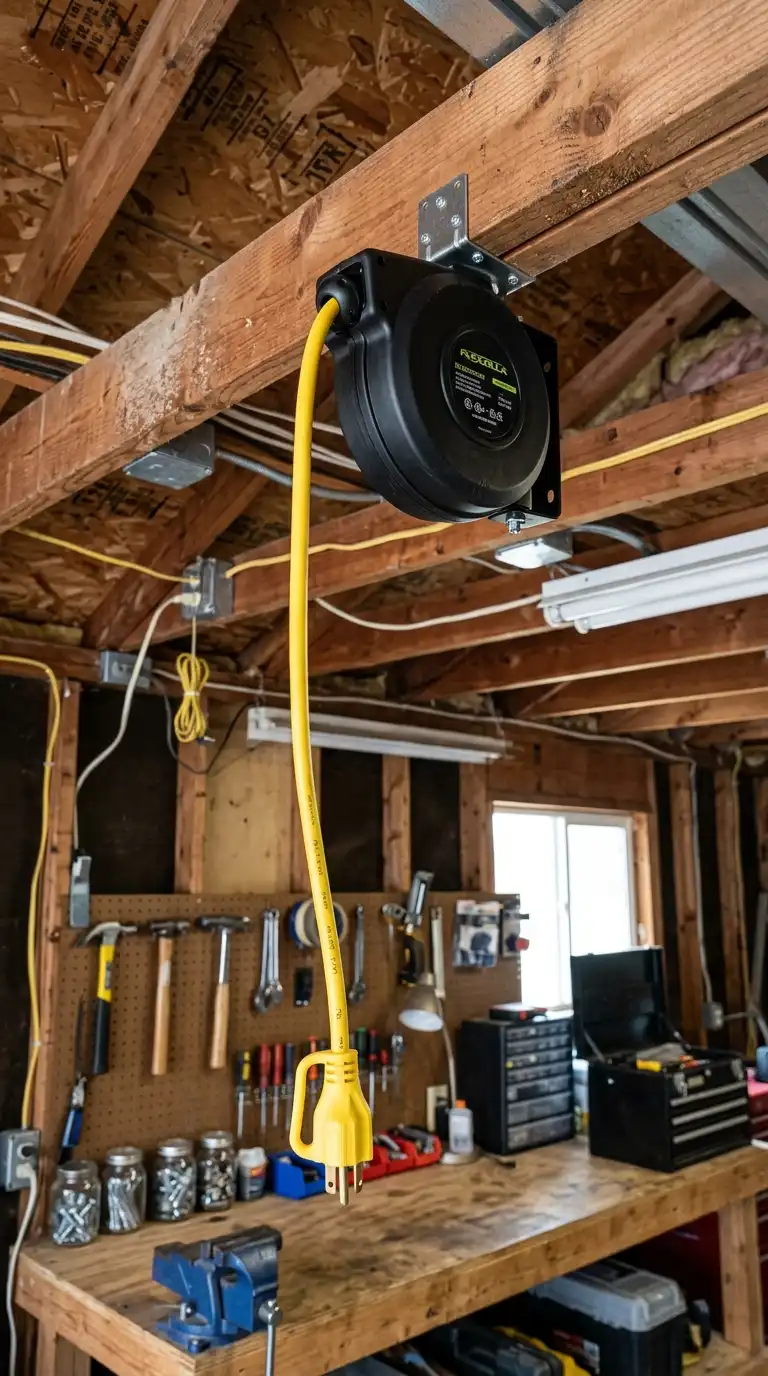
The gold standard of extension cord storage is the retractable cord reel mounted to the ceiling. These reels contain a spring-loaded mechanism that automatically winds the cord back into the housing when you give it a gentle tug. The cord stays clean, untangled, and always ready. Mount the reel directly above where you typically use power—above the workbench, near the garage door, or in the center of the ceiling.
Retractable reels come in various cord lengths, typically 25 to 65 feet, and gauges from 14 to 12 AWG. Choose a heavy-duty reel with a metal housing for durability. The reel should have a built-in circuit breaker or surge protector for safety. Some models include a locking mechanism that holds the cord at any length you pull out. Install the reel securely into ceiling joists using lag bolts. The cord should hang straight down without rubbing against any obstructions. A ceiling-mounted retractable reel keeps the cord off the floor entirely, eliminating tripping hazards and floor clutter. It is the most expensive option but also the most convenient. For garages with multiple work zones, install two or three reels in different locations.
2. Use a Wall-Mounted Cord Rack with Individual Hooks
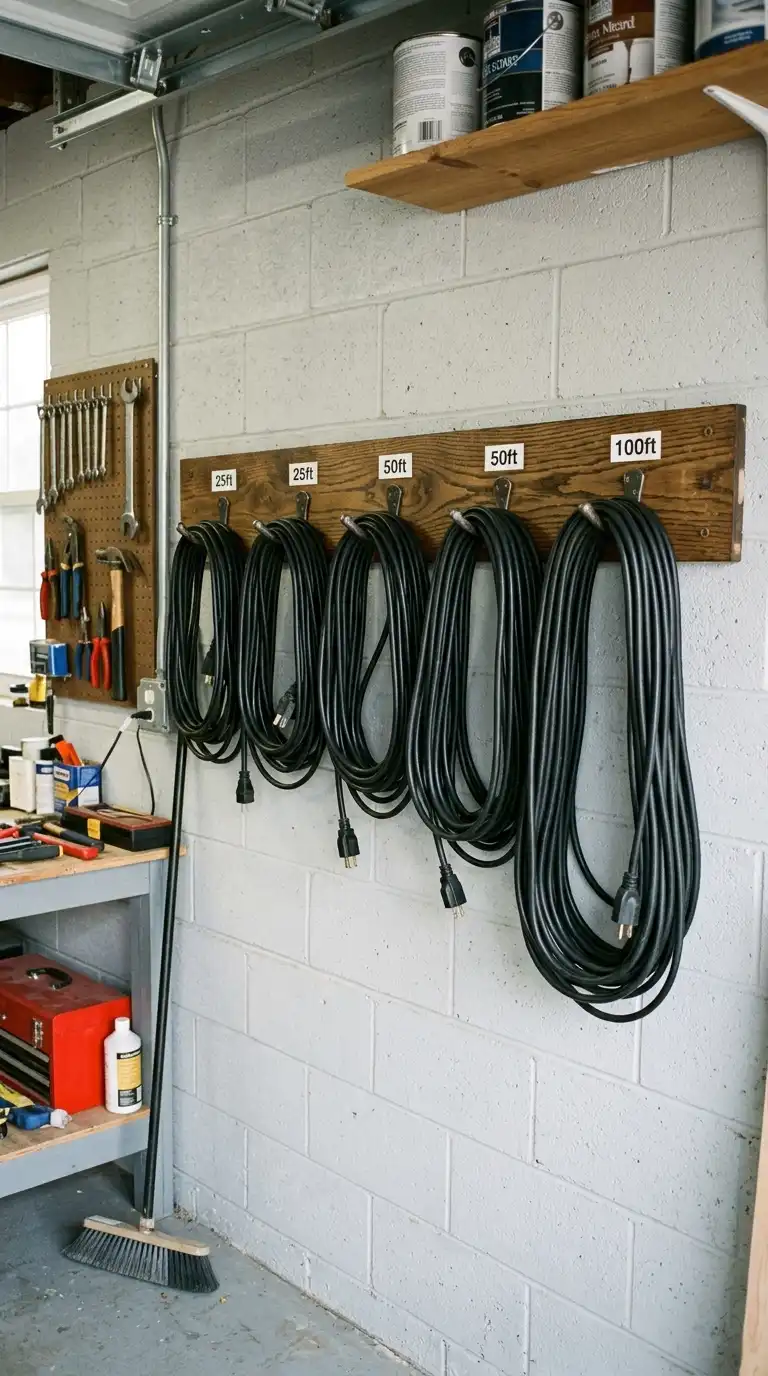
A simple wall-mounted rack with individual hooks is the classic extension cord storage solution. The rack consists of a wooden or metal board with several pegs or hooks. Each extension cord is coiled and hung on its own hook. This keeps cords separated so they do not tangle with each other. You can see at a glance which cord you need based on length, color, or gauge.
Build your own rack from a 1×4 board and five or six wooden dowels or metal hooks. Mount the board to wall studs at a comfortable height. Space the hooks at least six inches apart so cords do not touch. For a commercial option, buy a pre-made garden tool rack, which works perfectly for extension cords. Use a figure-eight coiling technique to prevent kinking: hold the plug end, loop the cord into a figure-eight shape, then hang the finished coil over the hook. Label each hook with the cord length and gauge using a label maker or permanent marker. This system works well for garages with multiple cords of different lengths. It is inexpensive, easy to install, and keeps cords visible and accessible.
3. Coil Cords and Store in Clear Plastic Bins
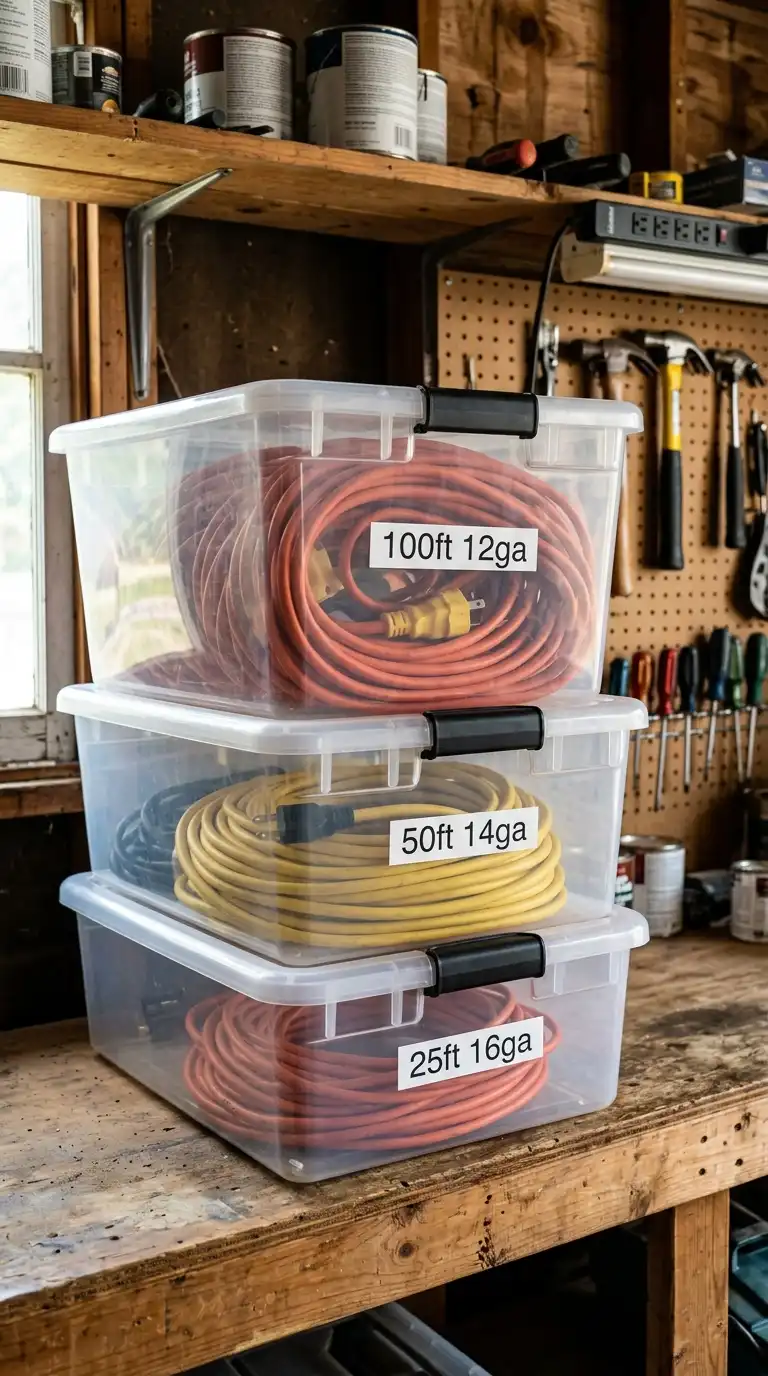
For garages with limited wall space, bin storage is an excellent alternative. Coil each extension cord neatly and place it in a clear plastic storage bin. Use a separate bin for each cord or group similar cords together. Clear bins allow you to see the contents without opening. Stackable bins fit on shelves or on the floor.
Coil cords properly before binning: hold the plug end, create loops of consistent size (12 to 18 inches in diameter), and secure the coil with a Velcro strap or a piece of twine wrapped through the center. Do not use zip ties, which can cut the cord insulation. Place the coiled cord in the bin with the plug and receptacle visible on top. Label the outside of the bin with the cord length, gauge, and any special features (like a lighted end or cold-weather rating). Bins protect cords from dust, moisture, and physical damage. They also make cords portable; grab the bin and take it to the project location. This storage method works best for garages with shelving units or cabinet storage.
4. Build a DIY Cord Winder from a Paddle Board
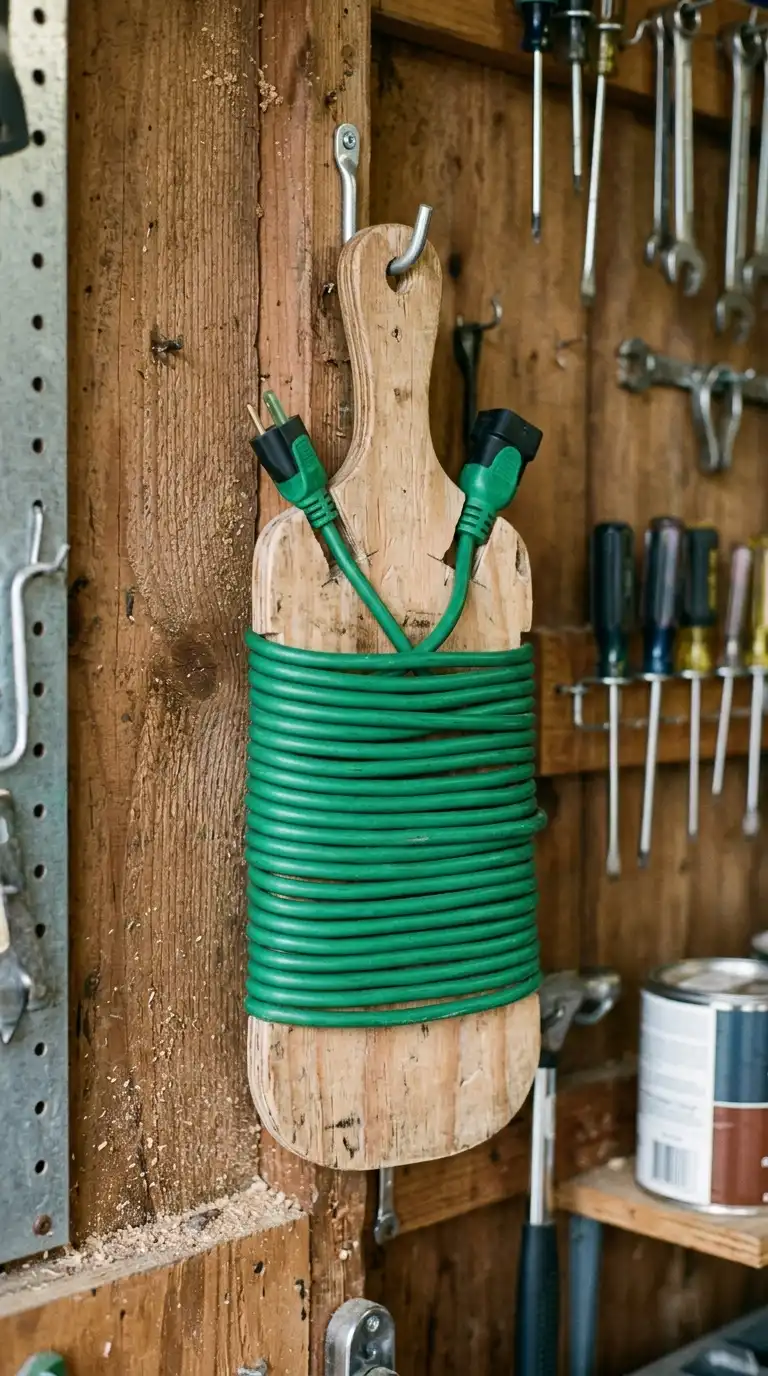
A homemade cord winder is a weekend project that costs almost nothing. Cut a piece of plywood into a paddle shape: a long handle with a wide, rounded end. Cut two slots or notches near the wide end to hold the cord ends. To wind a cord, wrap it around the paddle, then tuck the plug and receptacle into the notches. The paddle becomes a handle for carrying the cord.
You can also use a plastic cord winder designed for Christmas lights. These are inexpensive and work perfectly for extension cords. The winder has a central hub with two arms. Wrap the cord around the hub, then secure the ends in clips on the arms. The winder hangs on a wall hook when not in use. A paddle or winder keeps the cord in a flat, tidy coil that will not tangle. It also makes the cord easy to carry from the garage to the yard or jobsite. This is the most portable extension cord storage solution. Make several winders so each cord has its own.
5. Hang Cords Vertically from Cup Hooks
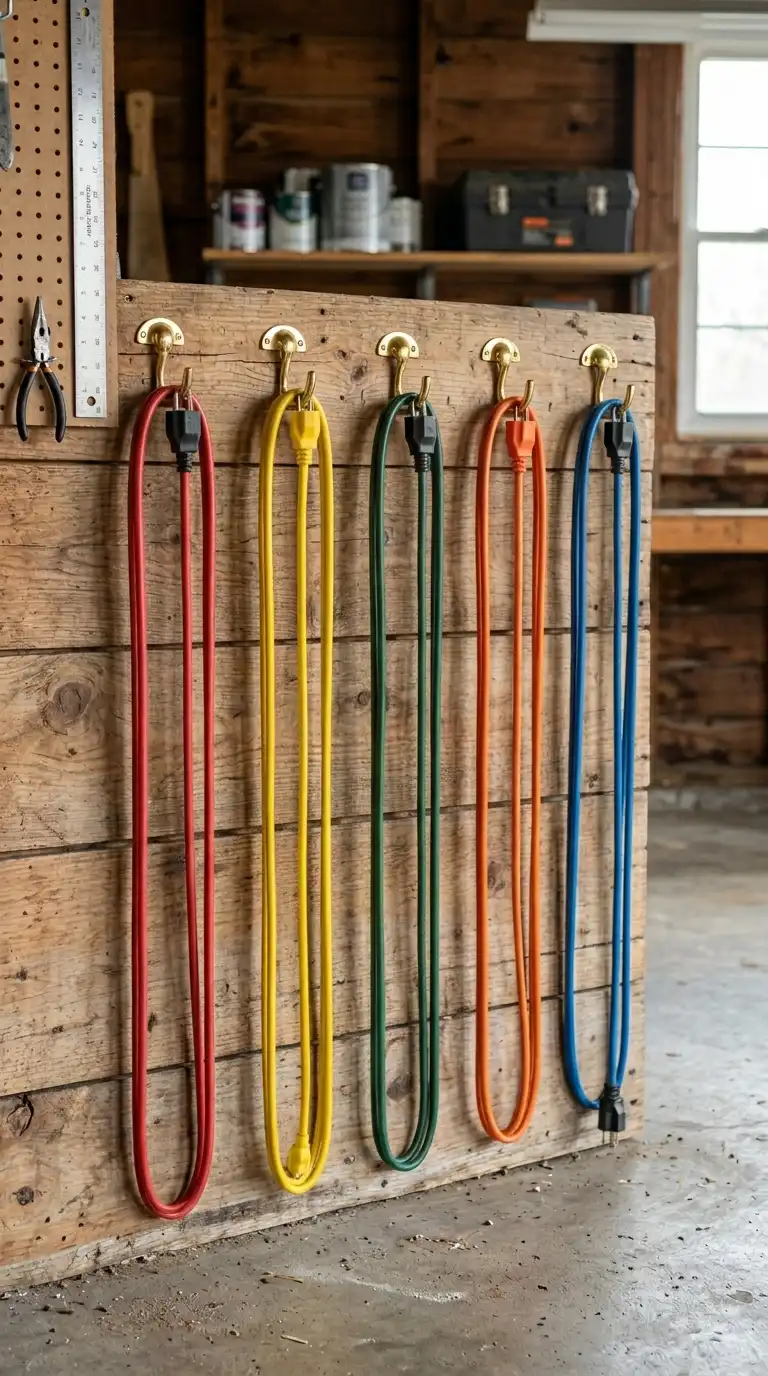
The simplest storage solution of all requires only a few cup hooks screwed into a wall or ceiling joist. Hang extension cords vertically by their plug end from a single cup hook. The cord hangs straight down, taking up very little wall space. Gravity keeps the cord untangled. To retrieve, simply lift the plug off the hook and pull the cord down.
Use cup hooks with a deep throat so the plug fits securely. Space hooks every six to eight inches along a wall or on the underside of a shelf. For long cords, use two hooks: one for the plug and one for the receptacle, with the cord drooping in a U-shape between them. This prevents the cord from dragging on the floor. Vertical hanging works best for cords up to 50 feet long. Longer cords may need additional support to prevent sagging. This is the cheapest and fastest extension cord storage solution. It takes five minutes to install and works perfectly for most home garages.
6. Use a Hose Reel for Heavy-Duty Extension Cords
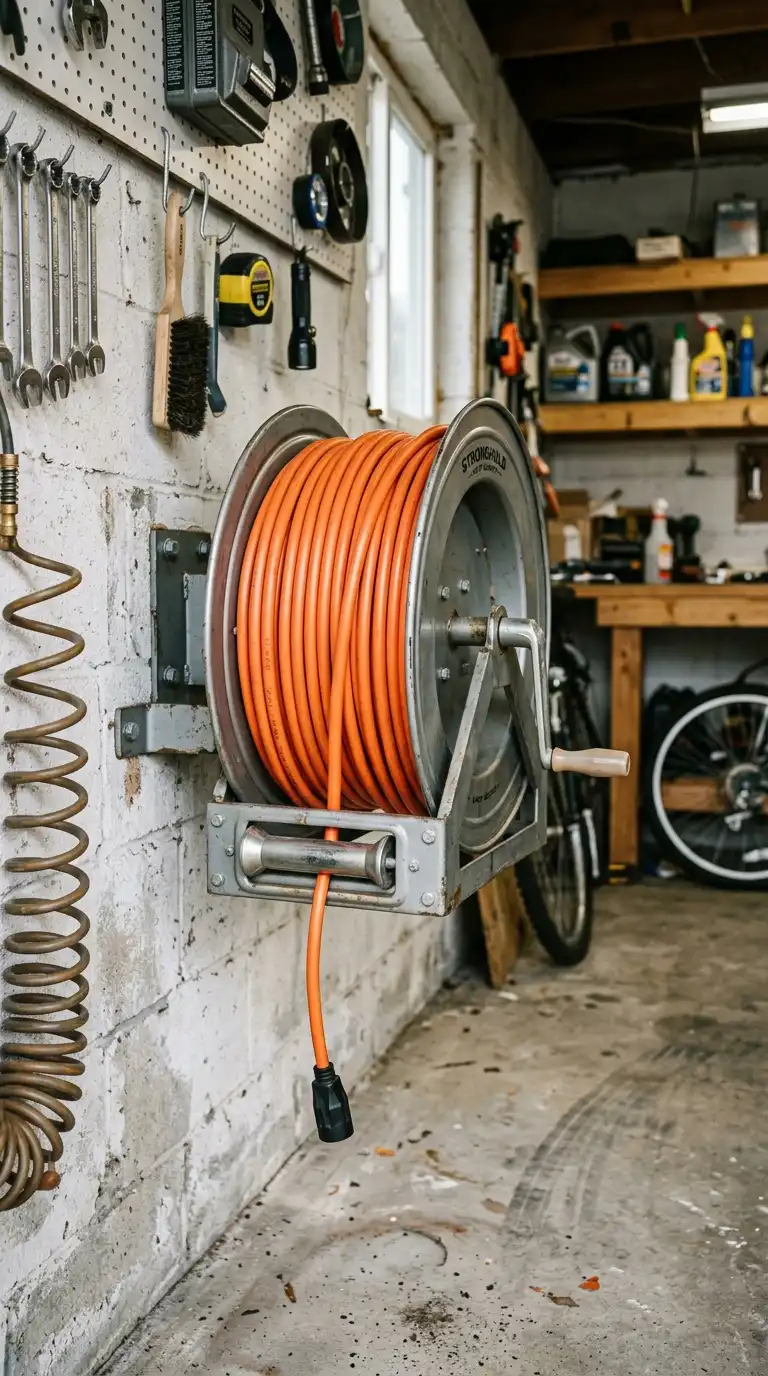
A garden hose reel is an unexpected but excellent solution for long, heavy-gauge extension cords. These reels are designed to hold 50 to 100 feet of hose, which is exactly the length of many extension cords. The reel’s crank handle makes winding and unwinding effortless. The reel can be wall-mounted or portable on wheels.
Choose a hose reel with a metal spool and a wide opening so the cord plug fits through. Plastic reels may crack under the weight of a heavy cord. Wind the cord onto the reel using the crank, leaving the plug and receptacle accessible. Some users drill a small hole in the reel flange to secure the cord ends. A hose reel is ideal for a 100-foot, 12-gauge cord used for powering tools at the far end of a large property. Crank reels are faster than manual coiling and produce a consistent, tangle-free wrap. They are also easier on the back than bending over to coil a long cord on the floor.
7. Store Cords in a Five-Gallon Bucket
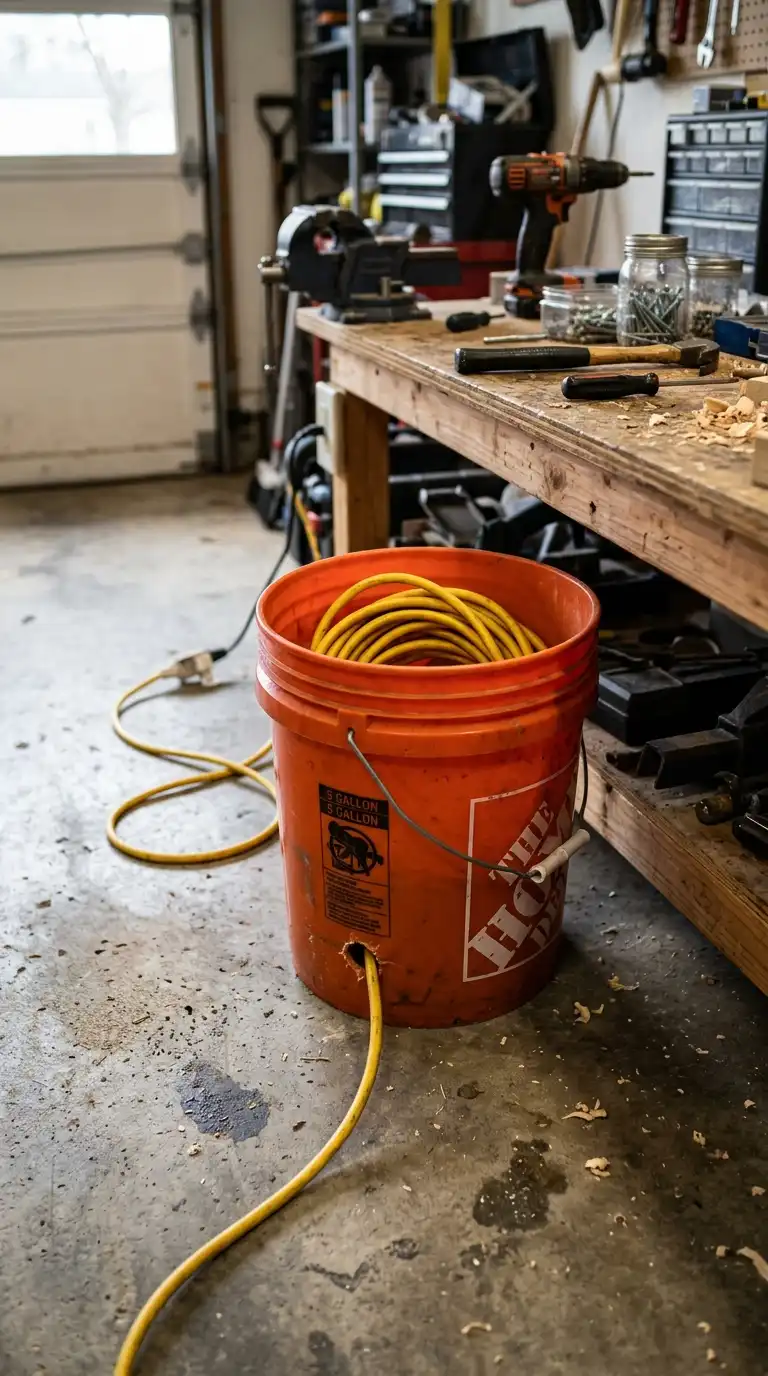
A five-gallon plastic bucket is a nearly free extension cord storage solution. Drill a hole in the side of the bucket near the bottom. Feed the plug end of the cord through the hole from the inside, then coil the rest of the cord inside the bucket. When you need the cord, grab the plug outside the bucket and pull. The cord unwinds from the inside out without tangling.
For a more polished version, buy a commercial bucket cord organizer. These have a central spindle inside the bucket and a lid with a hole for the cord. Some models include a handle for carrying. The bucket protects the cord from dirt and damage. It also keeps the cord contained and portable. Label the outside of the bucket with the cord length and gauge. Stack multiple buckets for multiple cords. This storage method is ideal for job sites or for homeowners who frequently take cords to different locations. The bucket is rugged, waterproof, and stackable.
8. Install a Pegboard with Custom Cord Hooks
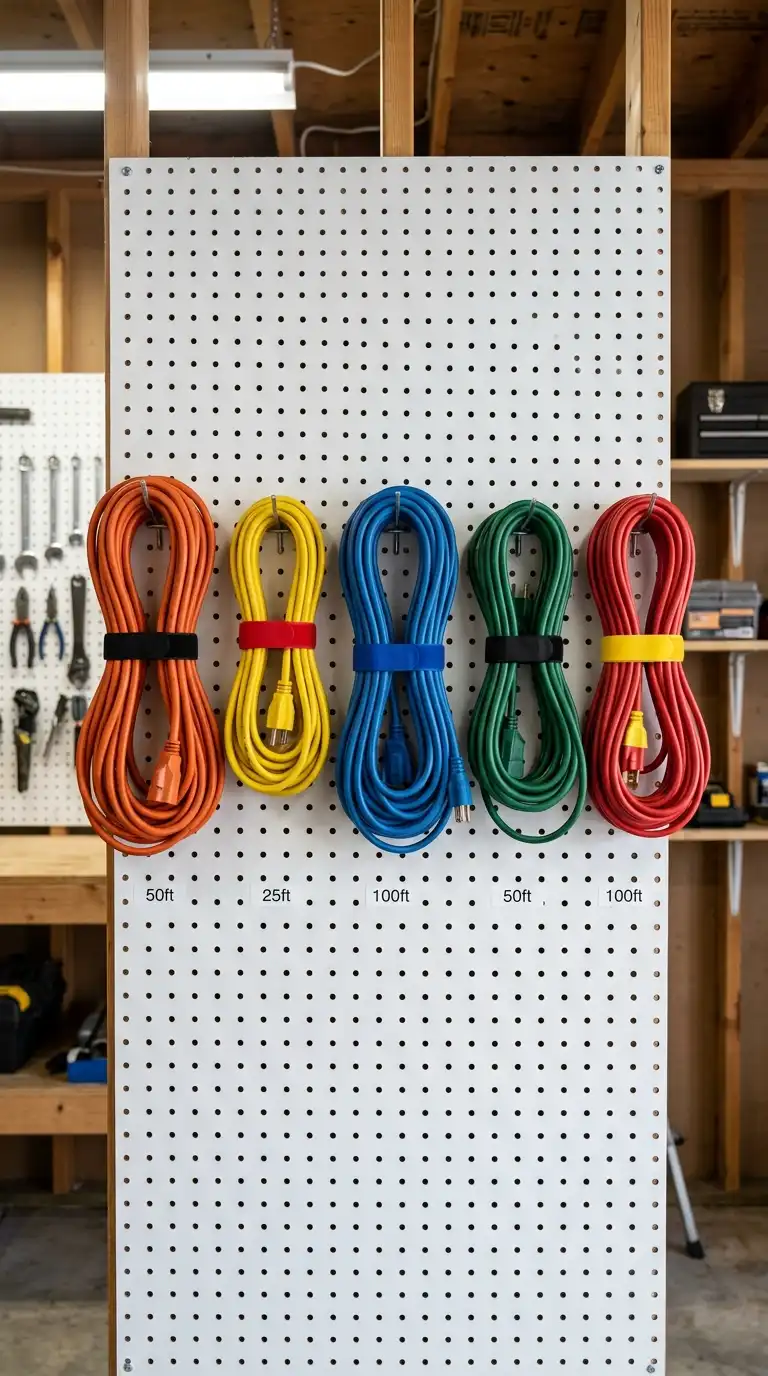
Pegboard is a garage storage classic. Install a 4×8 foot sheet of pegboard on a wall, then add custom hooks designed specifically for extension cords. Pegboard hooks come in various lengths and shapes. Use long straight hooks for hanging coiled cords. Use J-hooks for draping cords vertically. Use loop hooks for holding the cord ends.
Arrange your cords on the pegboard by length, color, or frequency of use. Label the area above each hook. The pegboard system is highly customizable. Add more hooks as you acquire more cords. Rearrange the layout at any time. Pegboard also stores other garage items: tools, clamps, safety glasses, and batteries. The visual organization of a pegboard makes it easy to see when a cord is missing. This system works best in garages with ample wall space. For a modern look, use metal pegboard or slatwall instead of traditional hardboard pegboard.
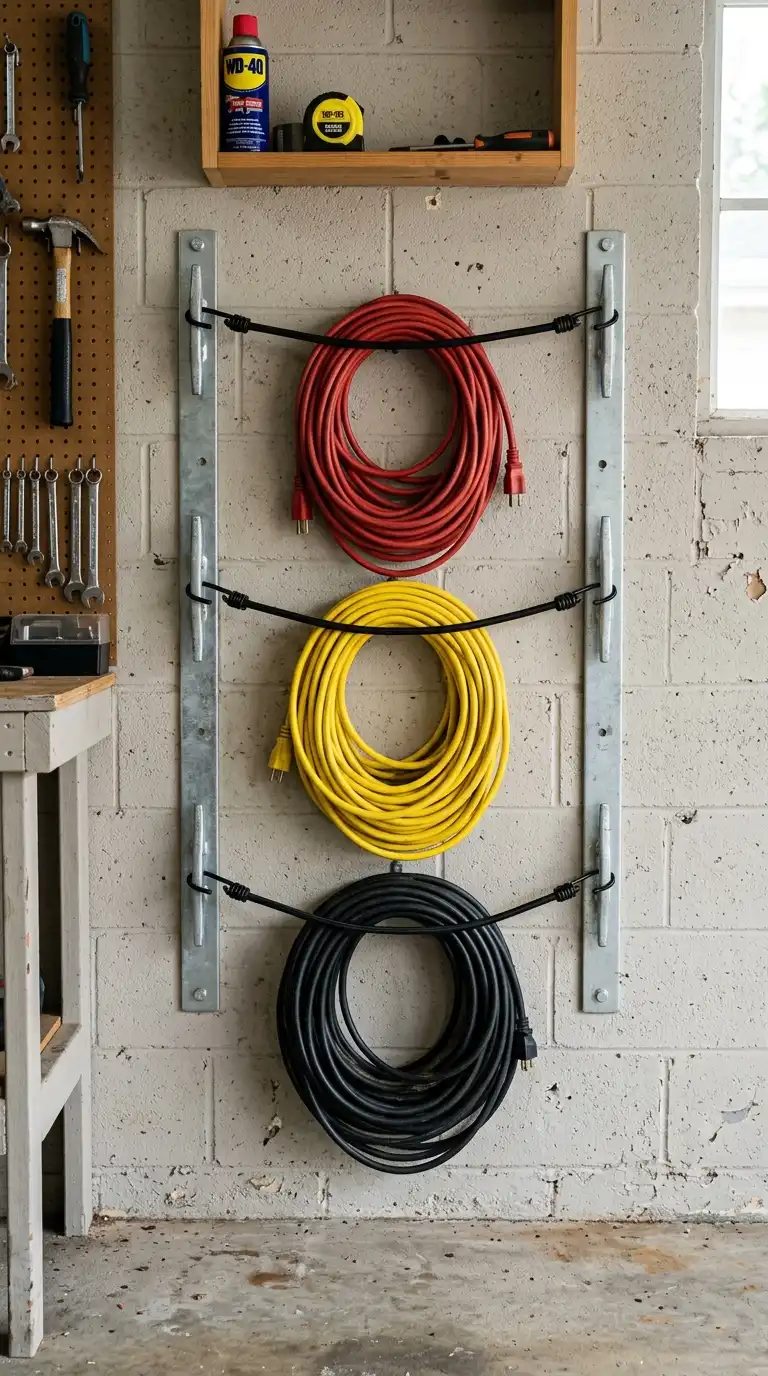
9. Use a Wall-Mounted Bungee Cord Grid
For a minimalist, industrial look, install a grid of bungee cords on a wall. Stretch bungee cords horizontally between two wall-mounted hooks or cleats, spaced six to eight inches apart. Slide coiled extension cords between the bungee cords and the wall. The bungee cords hold the cords in place with gentle tension. This system works like a magazine rack for extension cords.
To retrieve a cord, slide it out from between the bungee cords. To store, slide it back. The bungee grid accommodates cords of different sizes and coil diameters. It also stores other flat items like garden hoses, ropes, and air hoses. Install the bungee grid on a wall near the garage door where cords are most often used. This storage solution is inexpensive, visually interesting, and space-efficient. It is also flexible; you can add or remove bungee cords as your cord collection changes.
Key Elements for Extension Cord Storage
Coiling technique: Always use a figure-eight or over-under coil to prevent kinking. Labeling: Mark each cord with length and gauge for easy selection. Protection: Store cords away from direct sunlight, moisture, and heat. Accessibility: Store cords near where they are used most often. Separation: Never store cords tangled together; each cord needs its own space.
Conclusion
Extension cord storage does not need to be complicated or expensive. The best system is the one you will actually use. A tangled cord thrown in a corner is useless. A neatly coiled cord on a hook is ready for action. Whether you choose to install a retractable cord reel on the ceiling, use a wall-mounted rack with individual hooks, coil cords in clear plastic bins, build a DIY cord winder from a paddle board, hang cords vertically from cup hooks, use a hose reel for heavy-duty cords, store cords in a five-gallon bucket, install a pegboard with custom cord hooks, or create a wall-mounted bungee cord grid, the key is consistency. Always put the cord away in the same place, using the same coiling method, immediately after use. With these nine garage extension cord storage ideas, you will never waste another five minutes untangling a bird’s nest of wires again.